AI Search Visibility: A Practical Discoverability Guide
Build an AI search visibility program with a focused prompt set, clear source information, crawler awareness, and repeatable observations.
7 min readRead the guide
AI search visibility
See the difference between being mentioned, being cited, and being represented correctly. Start with a focused set of questions and a method your team can inspect.
01 / AI Visibility
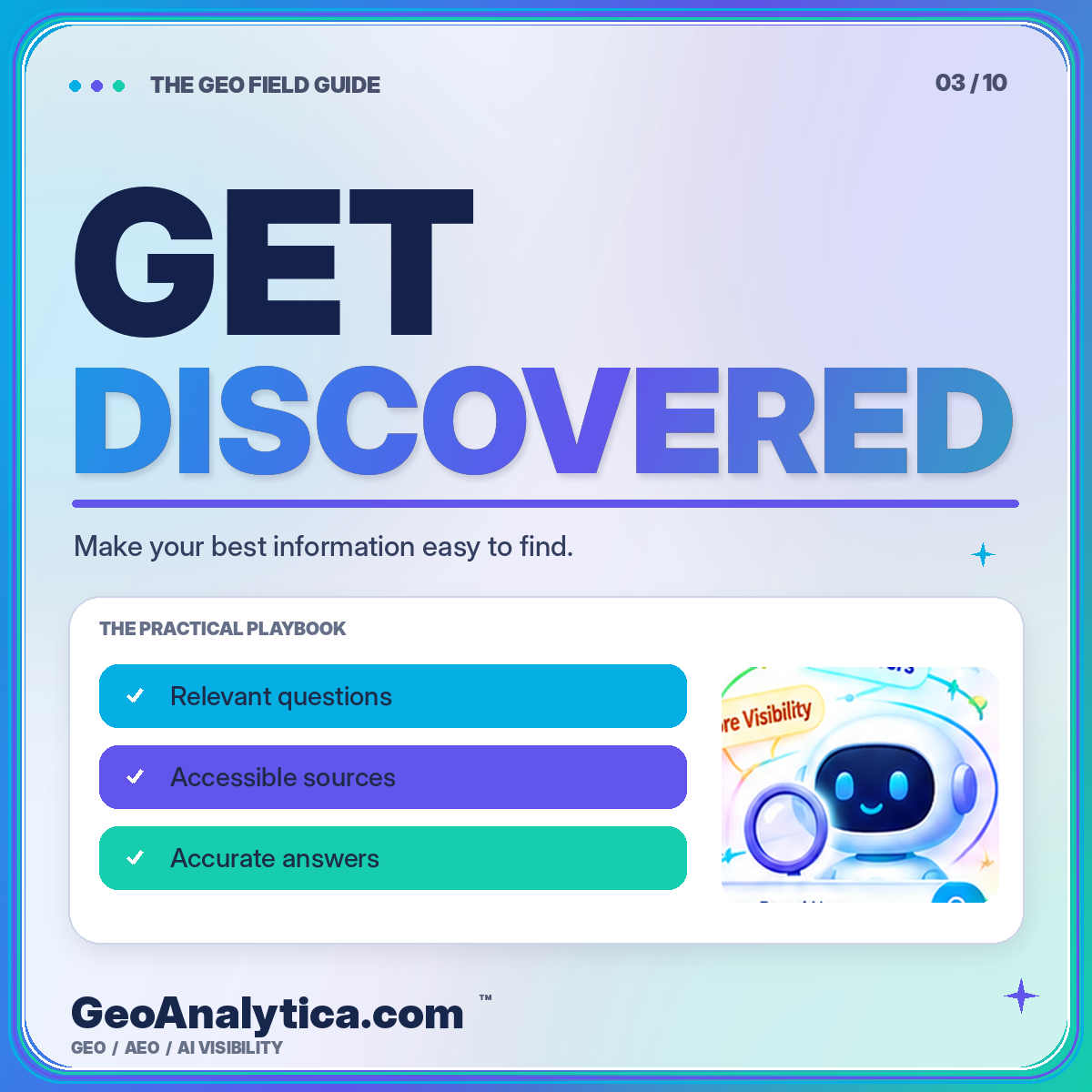
Choose the questions that matter to your audience’s decisions. Keep branded verification separate from unbranded discovery, and organize the sample by topic and intent. Record which experience and mode produced each answer rather than treating a product name as the whole context.
A manageable pilot is preferable to a large, opaque report. Begin with a scope the team can review consistently and expand when the additional observations answer a useful question.
02 / AI Visibility
A brand mention records that the name appeared. A domain citation records a qualifying source reference. An accuracy review checks whether the relevant statement is supported. One answer may meet some of these conditions without meeting the others.
Preserve the actual response and cited page where permitted. When a finding is important, someone should be able to inspect it. Do not let an automatic label or summary score replace the evidence.
03 / AI Visibility
An absence can indicate a research question: is the topic relevant, is the page missing information, or is another source clearer? A factual mismatch can lead to a source correction. A one-off variation may simply need another observation.
Give every actionable finding a page, owner, proposed change, and validation step. Treat the report as a guide to investigation, not a claim that you have measured every conversation or discovered a universal ranking formula.
GEO Field Notes
Build an AI search visibility program with a focused prompt set, clear source information, crawler awareness, and repeatable observations.
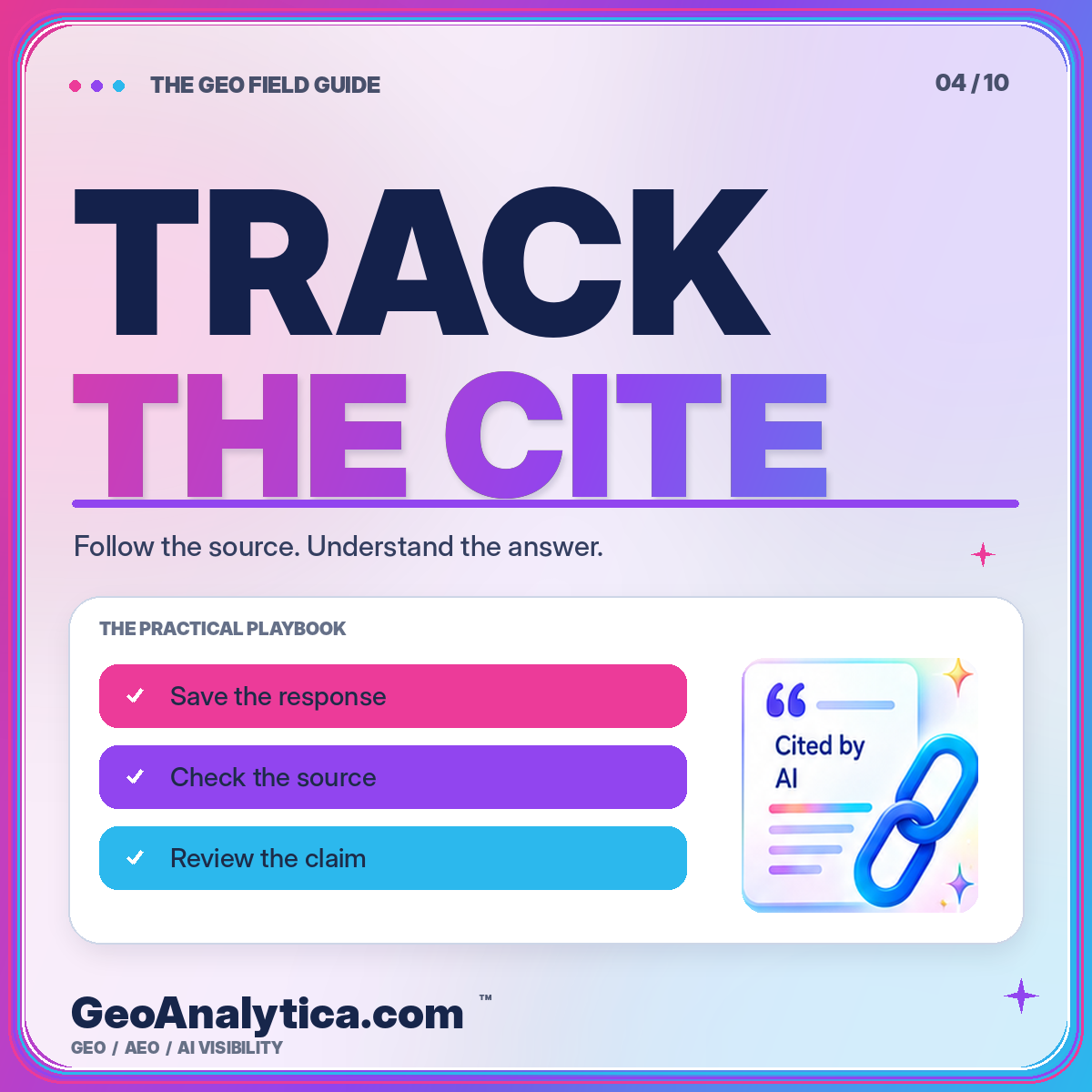
Learn how to track AI citations, define citation rates, review source accuracy, and turn a transparent observation sample into useful actions.
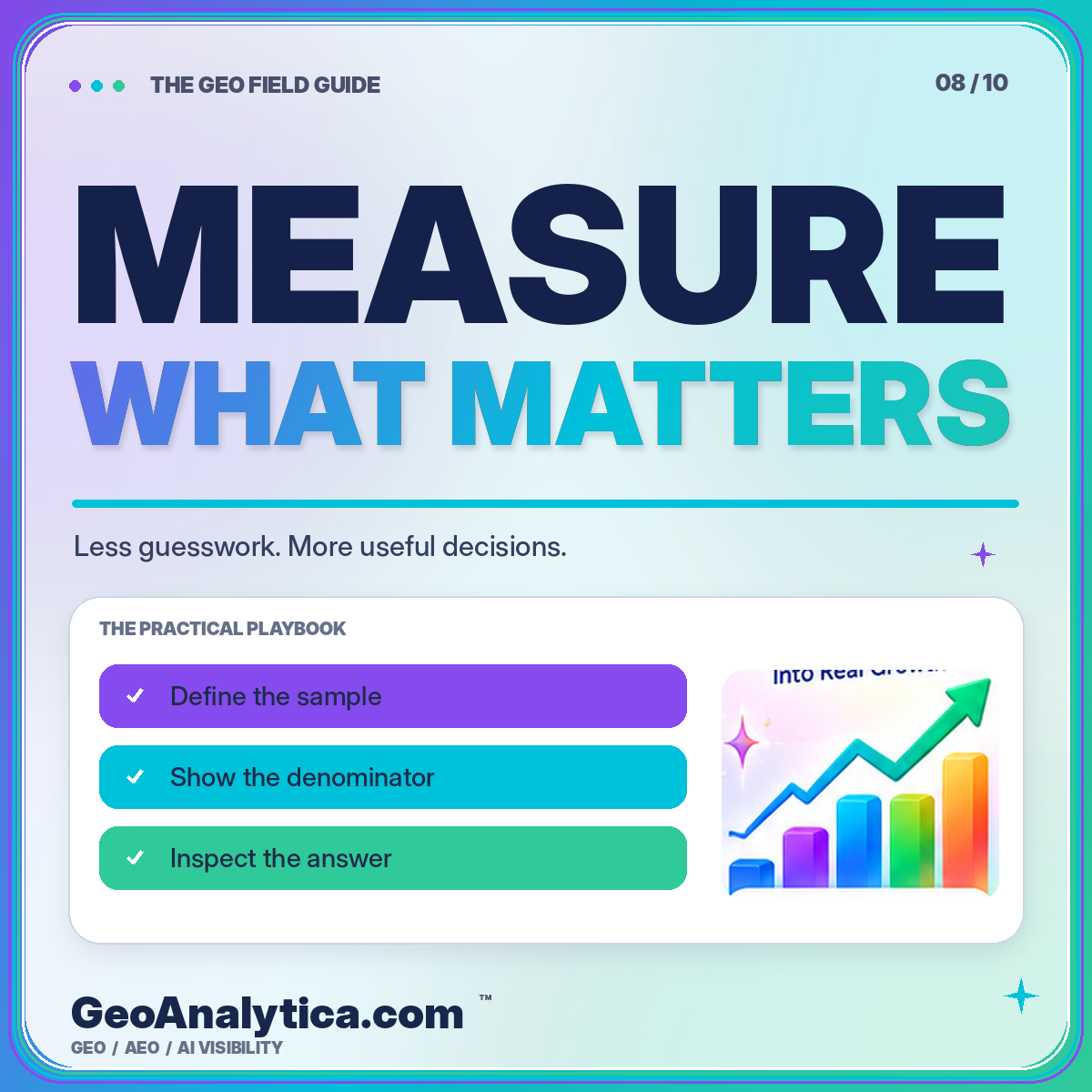
Separate AI mentions, citations, accuracy, and visitor outcomes. Build reporting with explicit denominators, documented samples, and actionable findings.
Bright ideas. Practical next steps.
Share your public domain, audience, and priority questions. Start with a scope built around the information your readers actually need.