What Is Generative Engine Optimization? A Practical GEO Guide
Understand generative engine optimization, the role of evidence and accessible content, and a practical workflow for measuring AI visibility.
7 min readRead the guide
Generative engine optimization
Make your most useful information easier to find, understand, and reference. A focused GEO strategy connects real audience questions with evidence your website can support.
01 / Generative Engine Optimization
Generative engine optimization is a working discipline for improving how a brand’s public information can participate in AI-generated answers. The controllable work happens on your own pages: explain the subject, support the claims, maintain the facts, and make the information accessible. The external outcome must then be observed rather than assumed.
Begin with one audience and a topic that matters to its decisions. Separate introductory questions from comparisons, implementation questions, and branded verification. A useful topic map connects each question to an intended page and identifies the evidence that page should provide.
02 / Generative Engine Optimization
A GEO content plan should clarify which page owns each important answer. Resolve competing definitions, outdated product names, and duplicated explanations before adding more material. Keep conditions near the claims they limit, and identify who can verify the underlying facts.
Your working deliverables can include a question-to-page map, an evidence-gap review, an editorial brief, and a prioritized technical checklist. Each item should name the affected page, the owner, and the acceptance check. A general instruction to “improve authority” is not enough.
03 / Generative Engine Optimization
Create a repeatable prompt set and record the assistant, mode, date, language, and exact question. Keep brand mentions, domain citations, and factual accuracy separate. Save examples so the team can inspect the evidence behind a finding.
A monitored sample is not the entire AI search market. Treat a change as a reason to investigate, not automatic proof that a particular edit caused it. The goal is a useful cycle of publishing, observation, and informed revision.
The original GEO research paper. The research establishes an experimental context for studying visibility; it does not guarantee a commercial website’s results.
GEO Field Notes
Understand generative engine optimization, the role of evidence and accessible content, and a practical workflow for measuring AI visibility.
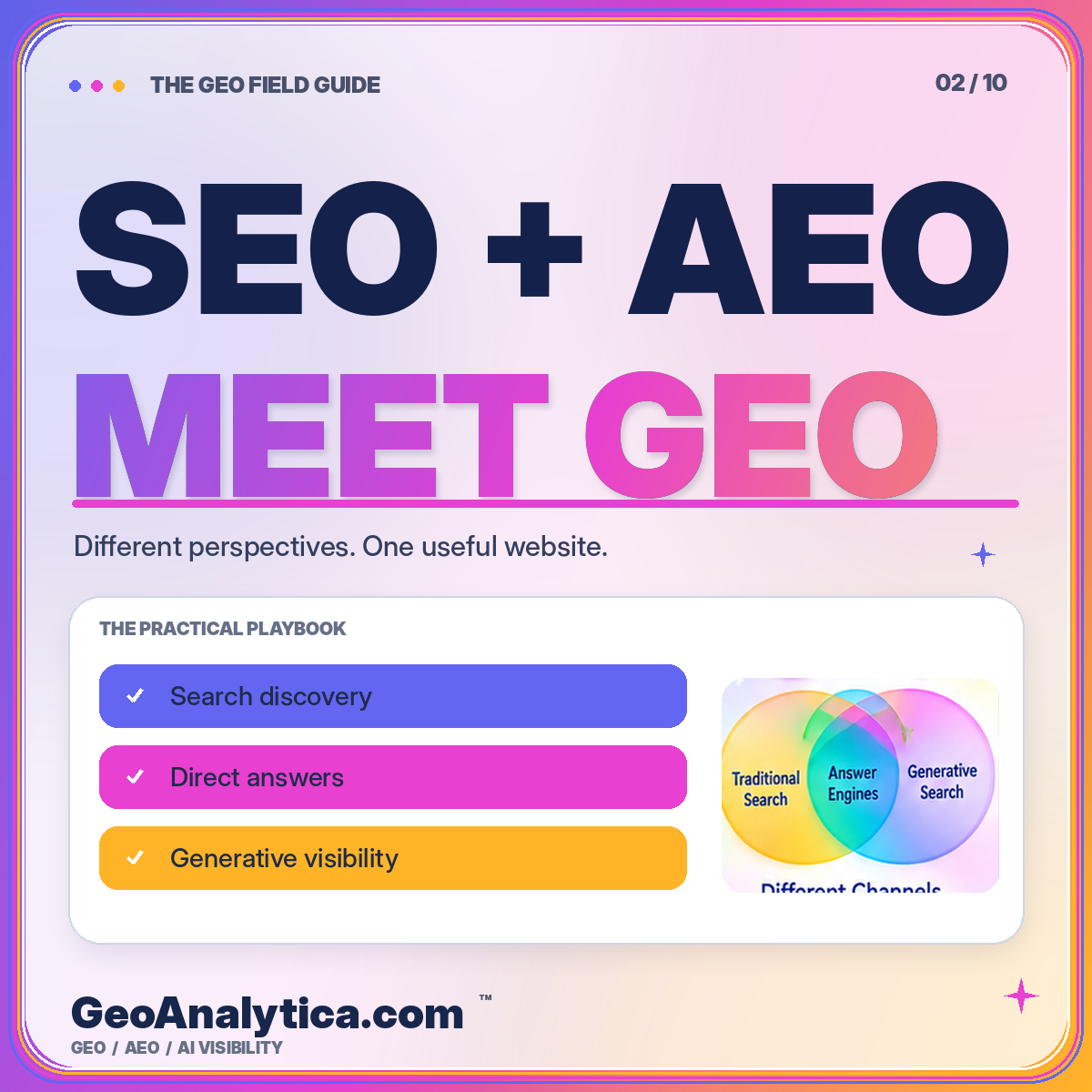
Compare SEO, AEO, GEO, and LLMO. Build one coordinated content strategy with clear responsibilities, useful pages, and meaningful measurement.
Run a focused GEO audit covering audience questions, page evidence, technical access, citations, and a prioritized implementation backlog.
Bright ideas. Practical next steps.
Share your public domain, audience, and priority questions. Start with a scope built around the information your readers actually need.