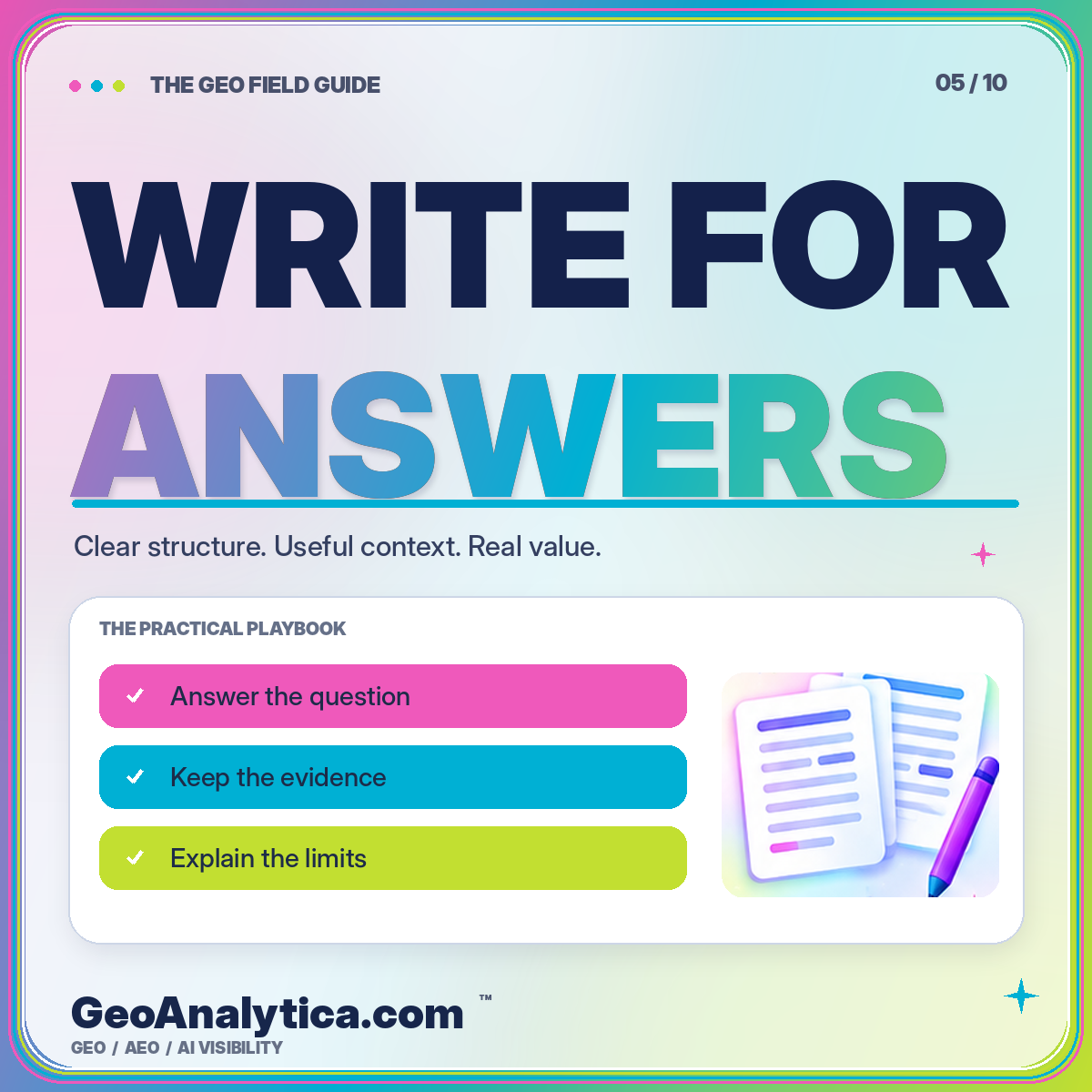
Answer-Ready Content: Write Clear, Evidence-Led Pages
Write answer-ready content using clear definitions, fair comparisons, useful procedures, and evidence placed beside the claims it supports.
7 min readRead the guide
Content optimization for AI search
Make your pages easier to understand without stripping away nuance. Start with the reader’s task, verify the facts, and choose a structure that supports the answer.
01 / Content Optimization
Read the page against the question it should answer. Is the central response missing, hard to find, unsupported, or contradictory? Each problem needs a different intervention. A clearer sentence cannot resolve an unknown product limitation, and more keywords cannot repair a missing procedure.
Separate evidence gathering from writing. Identify the owner of a material claim and the source that supports it. Build the editorial brief around verified information rather than asking a writer to create authority through tone alone.
02 / Content Optimization
Definitions need boundaries and examples. Comparisons need consistent criteria. Procedures need prerequisites and completion checks. Choose headings that reveal this structure and connect related explanations through descriptive internal links.
Test important passages outside their surrounding context. If a paragraph becomes ambiguous or loses a critical condition, revise it. Keep hypothetical examples clearly labeled, and do not compress an answer until it becomes misleading.
03 / Content Optimization
Assign responsibility for facts and clarity separately where appropriate. Record which events trigger a review, such as a renamed feature, revised process, or changed requirement. Keep metadata and structured data aligned with the visible content.
The output is a page your intended audience can use and verify. Subsequent AI observations can inform further investigation, but useful content should not depend on receiving a citation in a particular response.
Google’s people-first content guidance. The guidance provides review questions about usefulness, originality, accuracy, and value to the intended audience.
GEO Field Notes
Write answer-ready content using clear definitions, fair comparisons, useful procedures, and evidence placed beside the claims it supports.
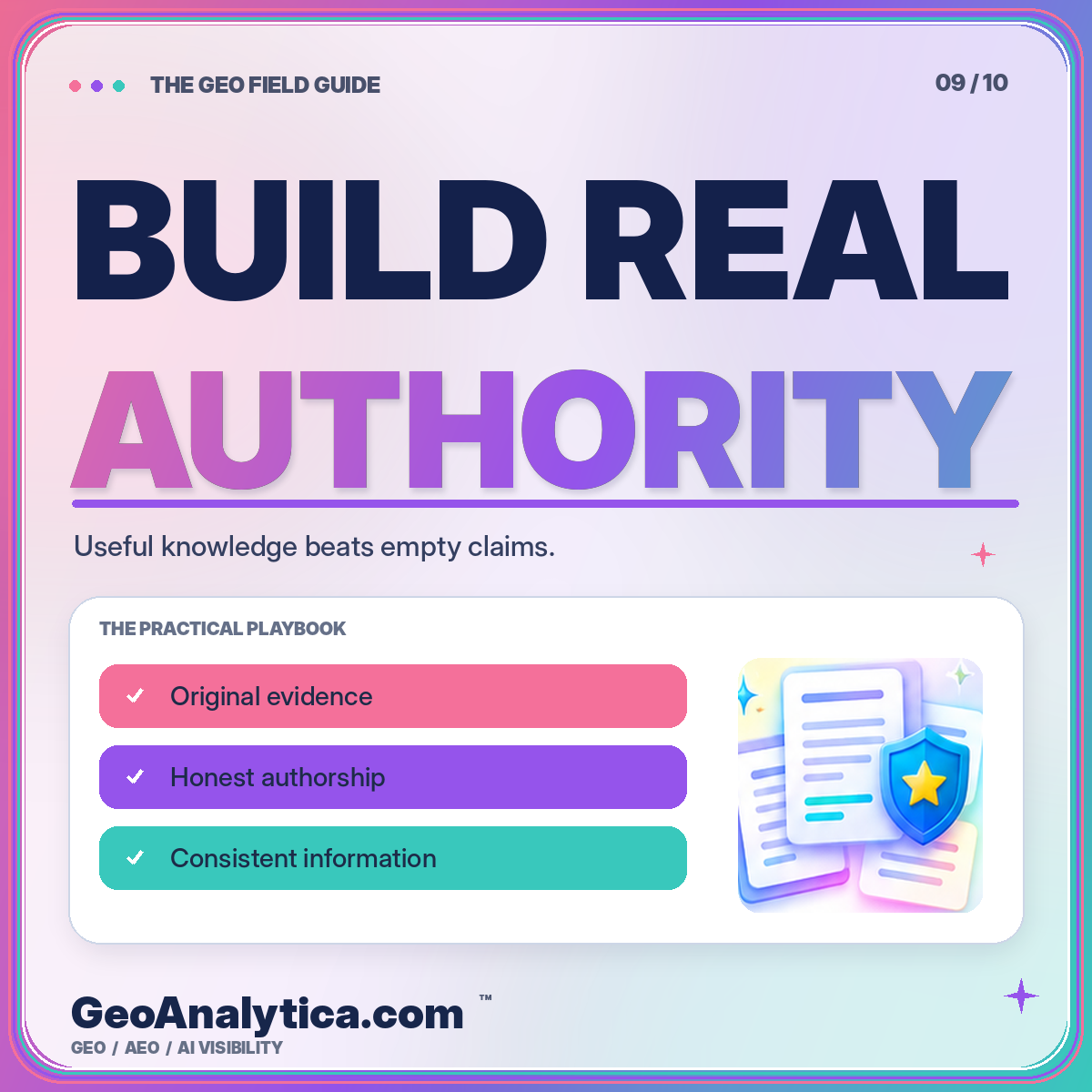
Build useful content authority with original evidence, clear authorship, consistent entity information, transparent methods, and a correction process.
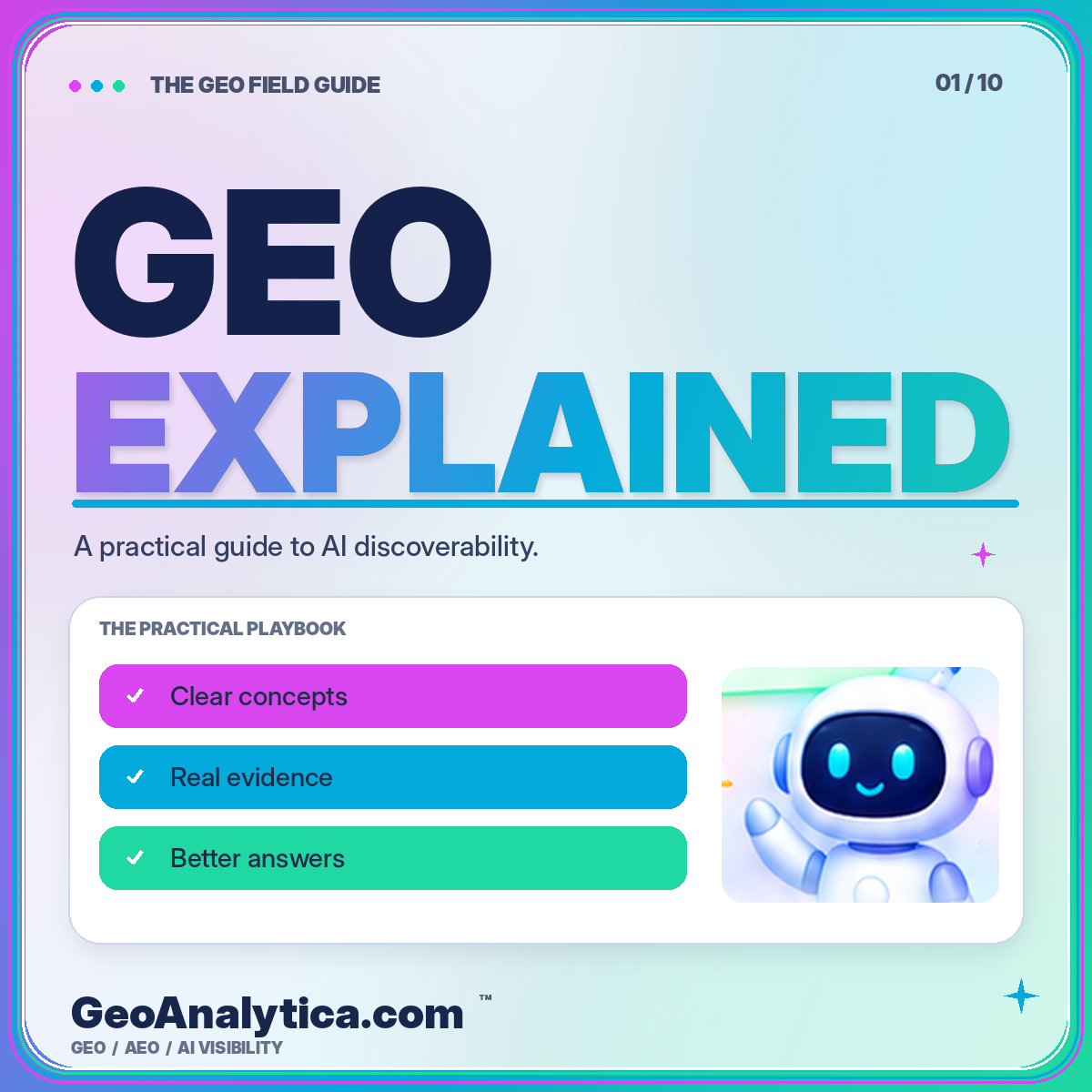
Understand generative engine optimization, the role of evidence and accessible content, and a practical workflow for measuring AI visibility.
Bright ideas. Practical next steps.
Share your public domain, audience, and priority questions. Start with a scope built around the information your readers actually need.