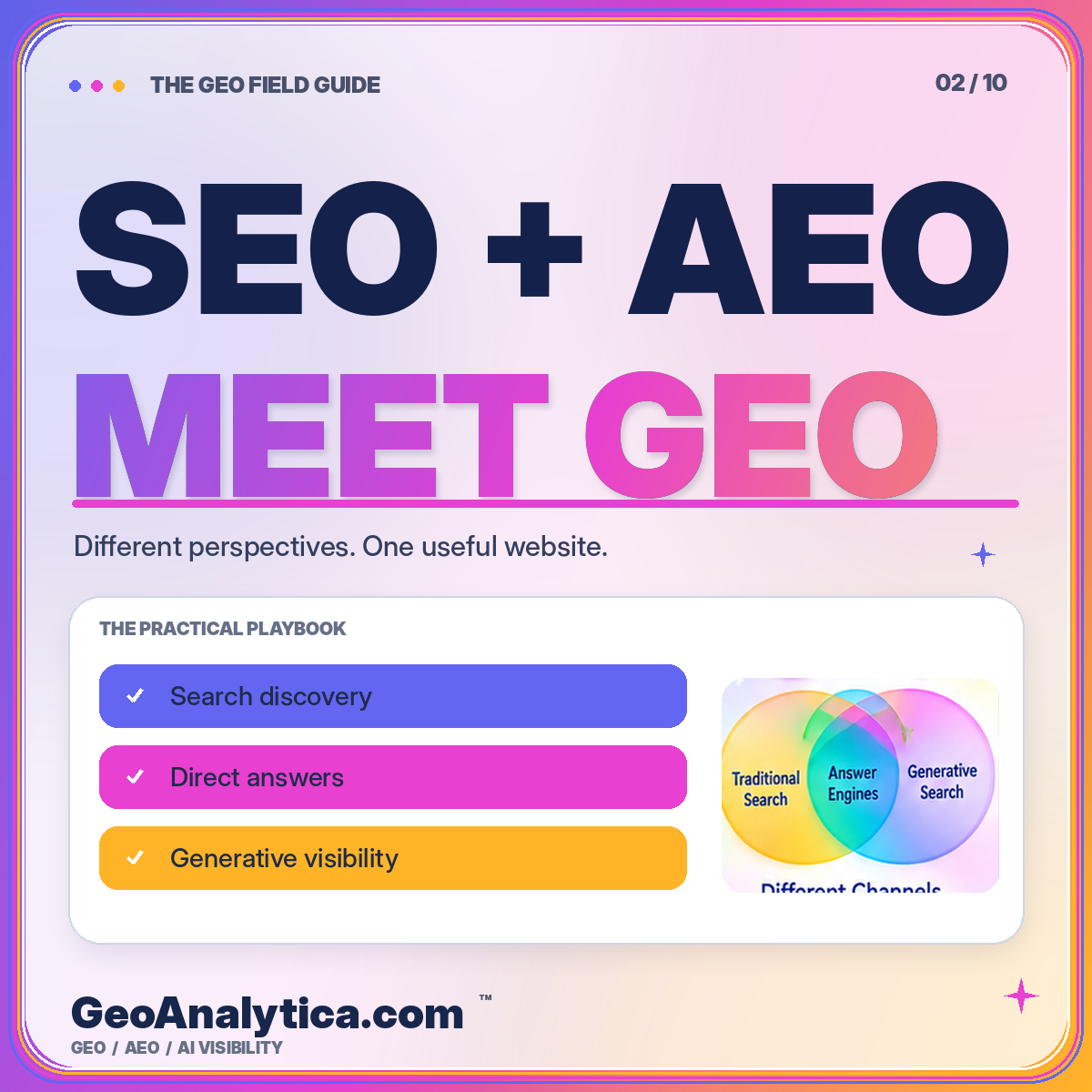
SEO vs. AEO vs. GEO: How the Strategies Work Together
Compare SEO, AEO, GEO, and LLMO. Build one coordinated content strategy with clear responsibilities, useful pages, and meaningful measurement.
7 min readRead the guide
Large language model optimization
Give your brand, products, and ideas a consistent public description. Website-focused LLMO is information architecture and editorial clarity—not a claim to control a model.
01 / LLM Optimization
Large language model optimization has several uses. Here, LLMO refers to improving the clarity of public website information: the names of entities, relationships between them, scope of claims, and consistency of definitions. It is not model training, fine-tuning, or a change to a provider’s internal parameters.
Use precise deliverable names in a project scope. A brand terminology record, an entity map, and a documentation consistency review are inspectable outputs. A promise to “teach every AI your brand” is not a useful acceptance criterion.
02 / LLM Optimization
Start by listing the organization, products, services, editions, and concepts that recur across important pages. Record accepted names and abbreviations. Identify where a renamed feature or superseded definition still appears, and decide which page is the maintained source.
Map relationships only as far as the content supports them. Make it clear whether a name describes a company, a product, a feature, or a methodology. Do not create invented credentials or associations to make a graph look more complete.
03 / LLM Optimization
Replace vague claims with specific descriptions and clear conditions. Separate hypothetical examples from actual results. Put constraints close to the claims they limit, and link to deeper documentation when a short passage cannot carry all the necessary detail.
Review page text, metadata, and structured data together. They should describe the same subject. A successful clarity project leaves fewer contradictions and a simpler maintenance process, whether or not a particular prompt observation changes afterward.
GEO Field Notes
Compare SEO, AEO, GEO, and LLMO. Build one coordinated content strategy with clear responsibilities, useful pages, and meaningful measurement.
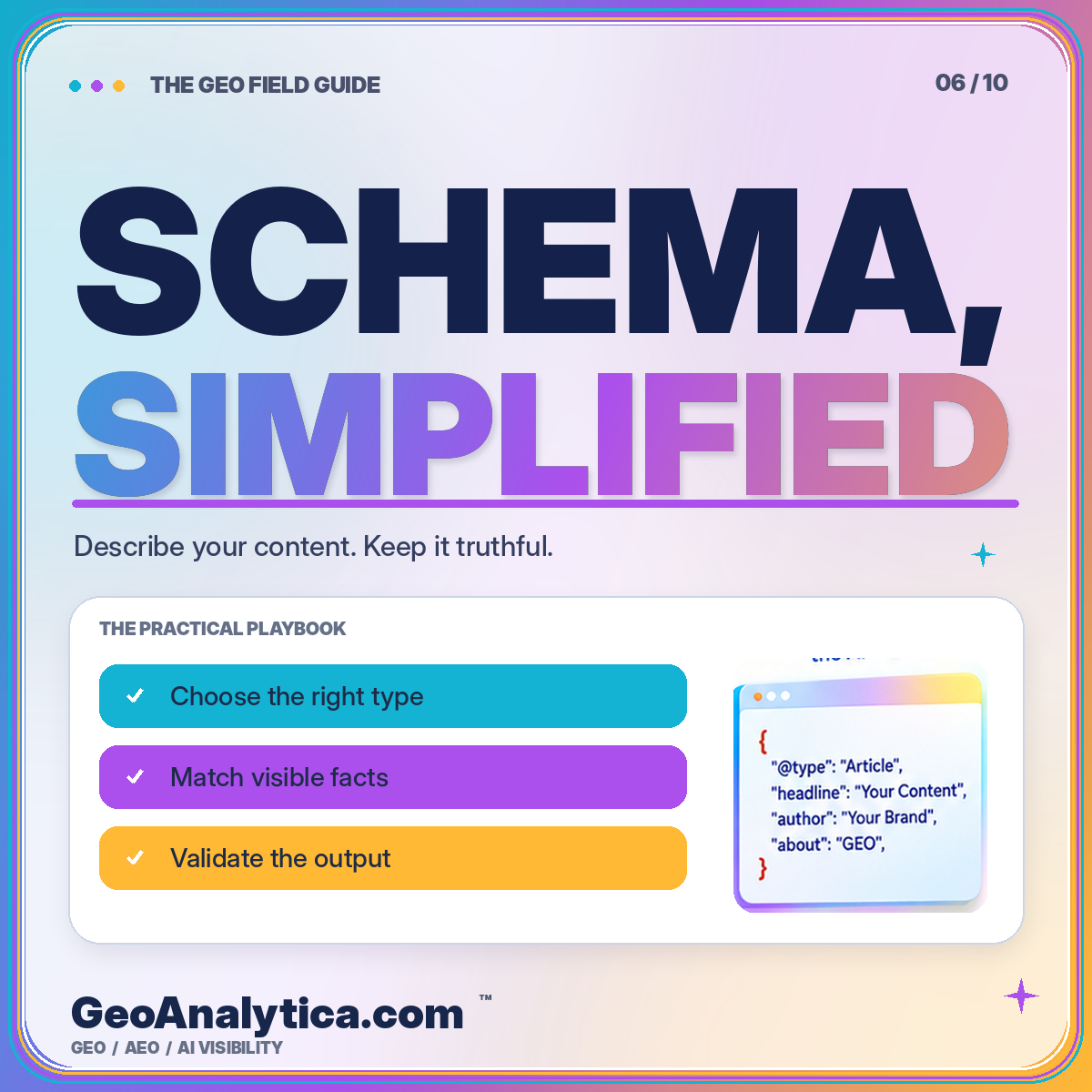
Use truthful structured data for articles, pages, and publishers. Learn how to keep JSON-LD aligned with visible content and canonical URLs.
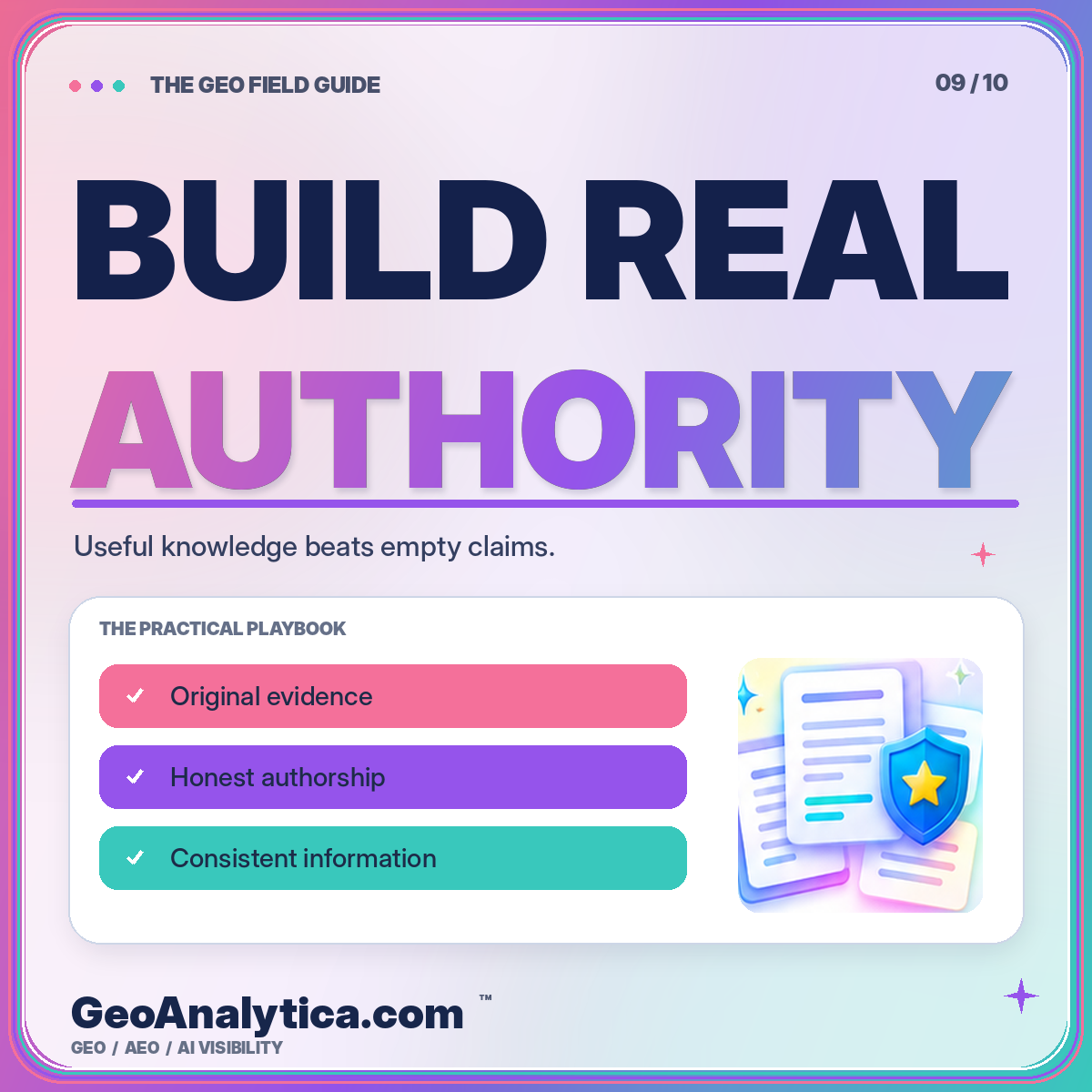
Build useful content authority with original evidence, clear authorship, consistent entity information, transparent methods, and a correction process.
Bright ideas. Practical next steps.
Share your public domain, audience, and priority questions. Start with a scope built around the information your readers actually need.