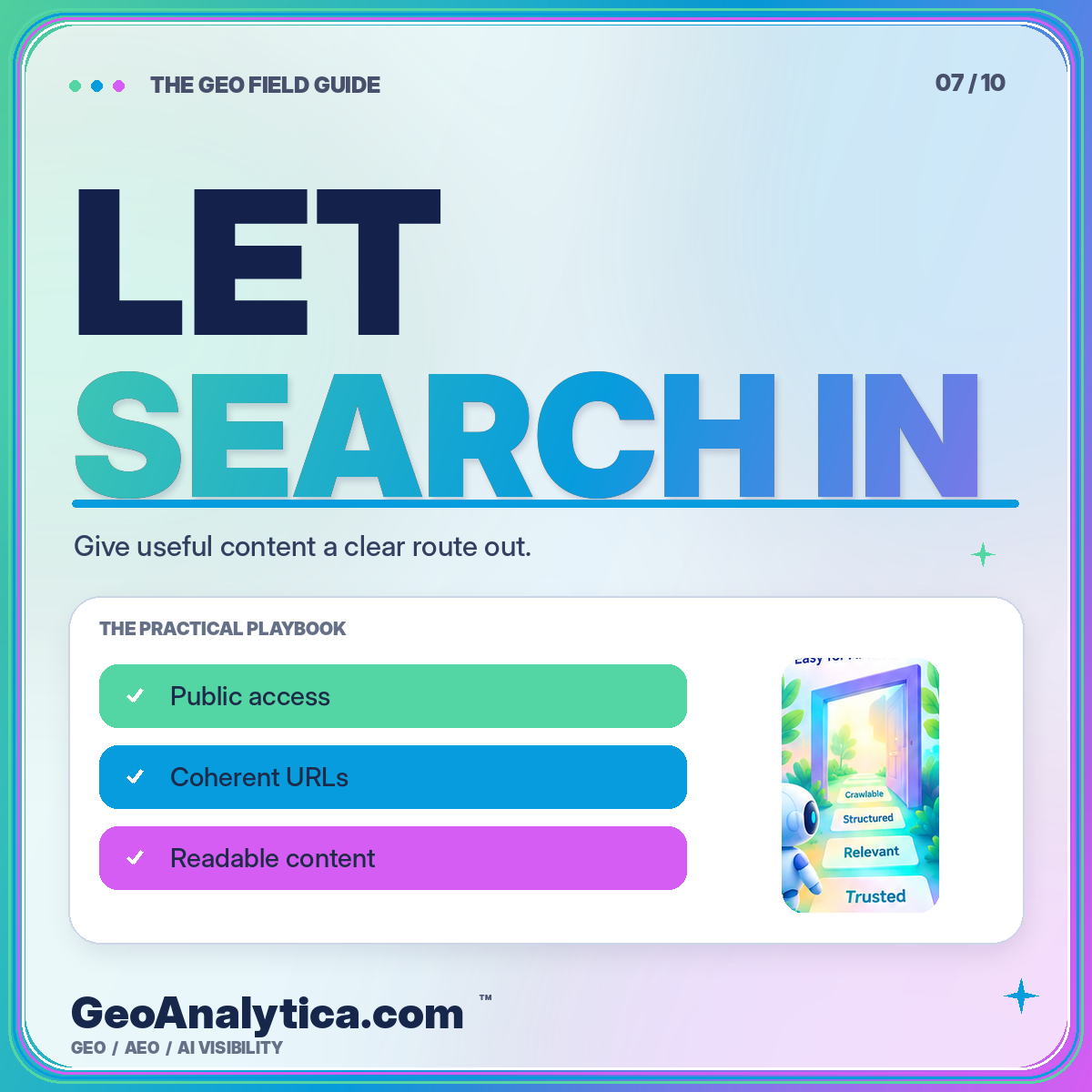
Technical SEO for AI Discovery: Crawlability and Content Access
Review crawler access, delivered HTML, canonical URLs, internal links, and mobile usability before expanding your GEO content program.
6 min readRead the guide
Technical SEO for AI discovery
Before rewriting a useful page, make sure it can be reached. Review the public site your server actually delivers, from navigation links to canonical addresses.
01 / Technical SEO
Start with the homepage, a service page, an article, an archive, and essential documentation. Record each page’s purpose, canonical address, and owner. Review the browser experience and the delivered HTML so the team understands what is present and what depends on scripts.
Check images, headings, keyboard access, and mobile navigation. The sticky header should not cover an anchored section, and important information should not exist only inside a decorative image.
02 / Technical SEO
Read the deployed robots rules and check whether they match the intended public publishing policy. Review hosting restrictions, redirects, and relevant diagnostics where authorized. Do not remove deliberate protections merely to produce a cleaner audit score.
Google explains that robots.txt controls crawling and is not a security mechanism. Protect sensitive material with appropriate access controls. Keep provider-specific crawling decisions distinct from assumptions about model training or universal AI visibility.
03 / Technical SEO
A useful technical finding names the page, observed behavior, intended behavior, owner, and validation step. Prioritize confirmed delivery failures and important audience tasks before speculative changes. After deployment, repeat the original check and record the result.
Review internal links, canonical tags, and sitemap entries together. They should tell a consistent story about the site’s maintained pages. Technical readiness creates a foundation; it does not guarantee an external citation.
Google’s robots.txt guide. Use the documentation to distinguish crawling controls, indexing decisions, and genuine access protection.
GEO Field Notes
Review crawler access, delivered HTML, canonical URLs, internal links, and mobile usability before expanding your GEO content program.
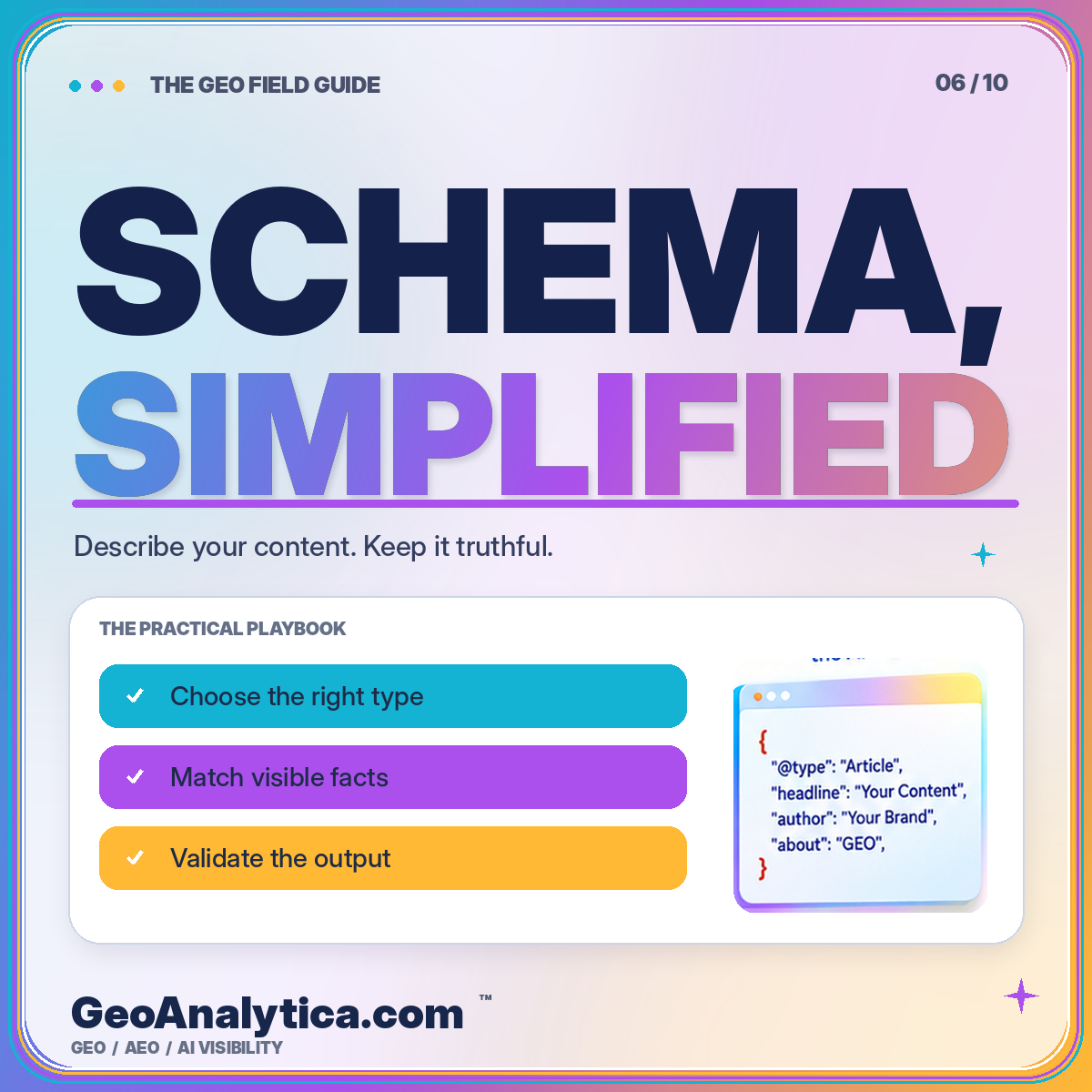
Use truthful structured data for articles, pages, and publishers. Learn how to keep JSON-LD aligned with visible content and canonical URLs.
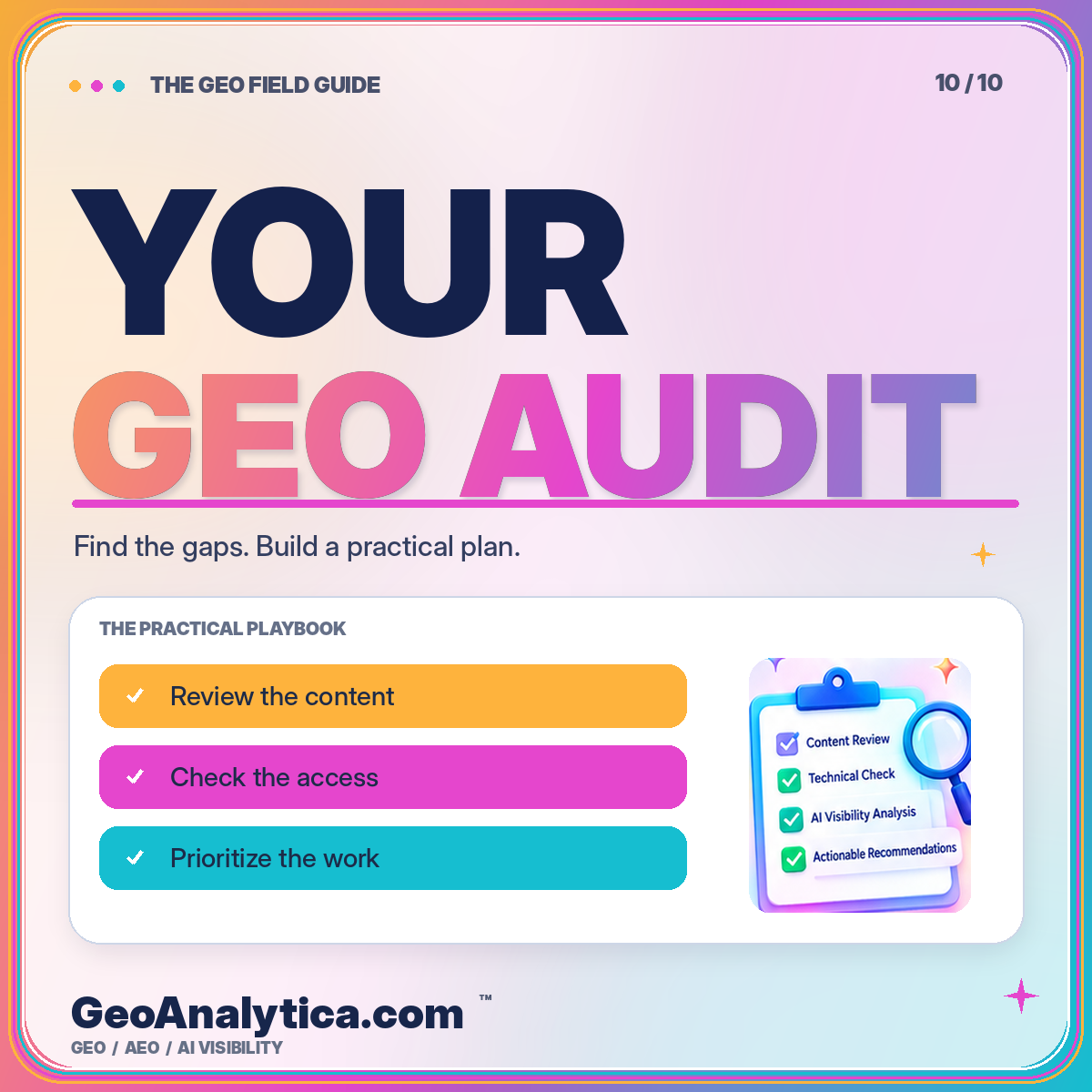
Run a focused GEO audit covering audience questions, page evidence, technical access, citations, and a prioritized implementation backlog.
Bright ideas. Practical next steps.
Share your public domain, audience, and priority questions. Start with a scope built around the information your readers actually need.