What Is Generative Engine Optimization? A Practical GEO Guide
Understand generative engine optimization, the role of evidence and accessible content, and a practical workflow for measuring AI visibility.
7 min readRead the guide
Ideas you can put to work
Ten in-depth guides on generative engine optimization, AI visibility, content clarity, citation measurement, and technical foundations. Start with a question; leave with a practical next step.
Understand generative engine optimization, the role of evidence and accessible content, and a practical workflow for measuring AI visibility.
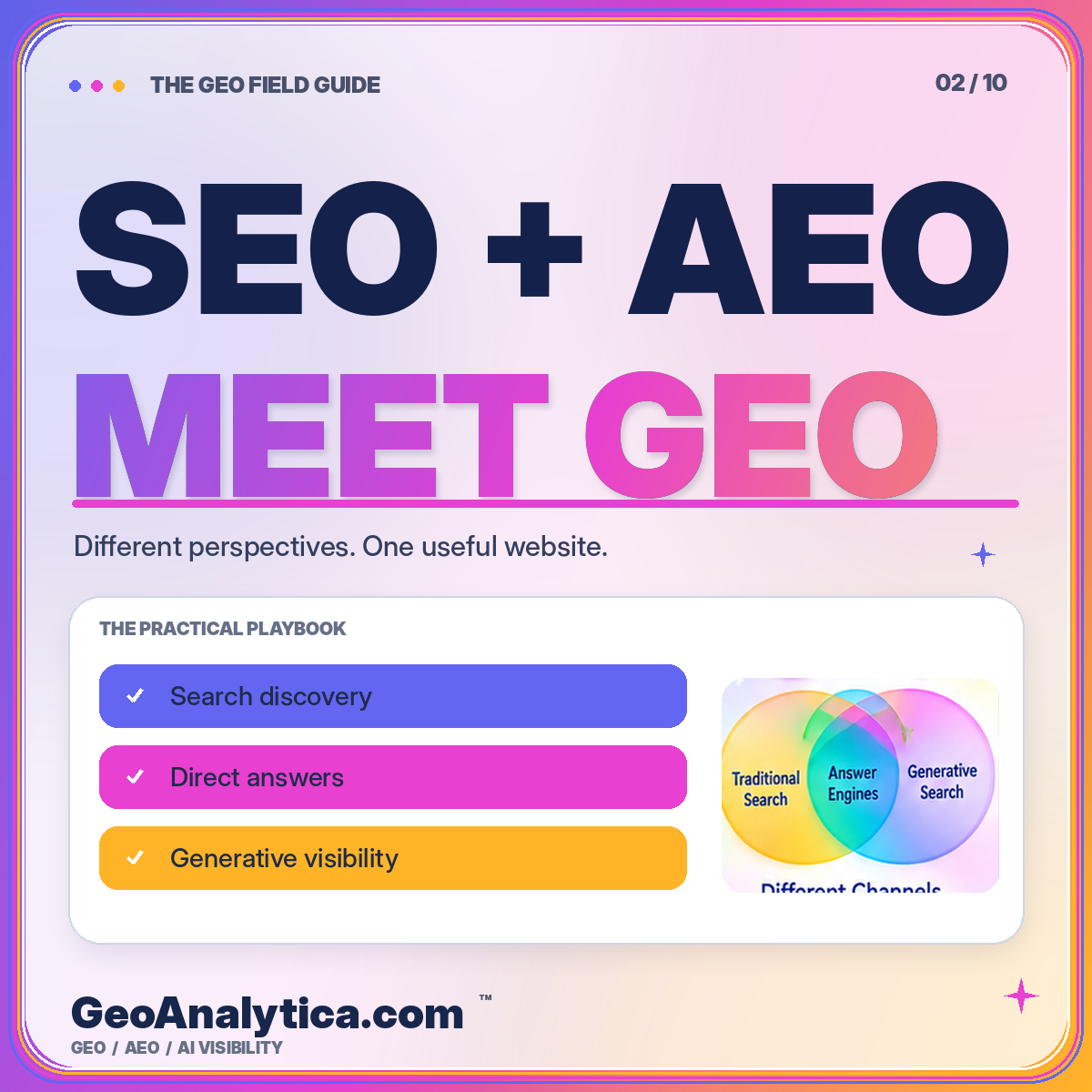
Compare SEO, AEO, GEO, and LLMO. Build one coordinated content strategy with clear responsibilities, useful pages, and meaningful measurement.

Build an AI search visibility program with a focused prompt set, clear source information, crawler awareness, and repeatable observations.
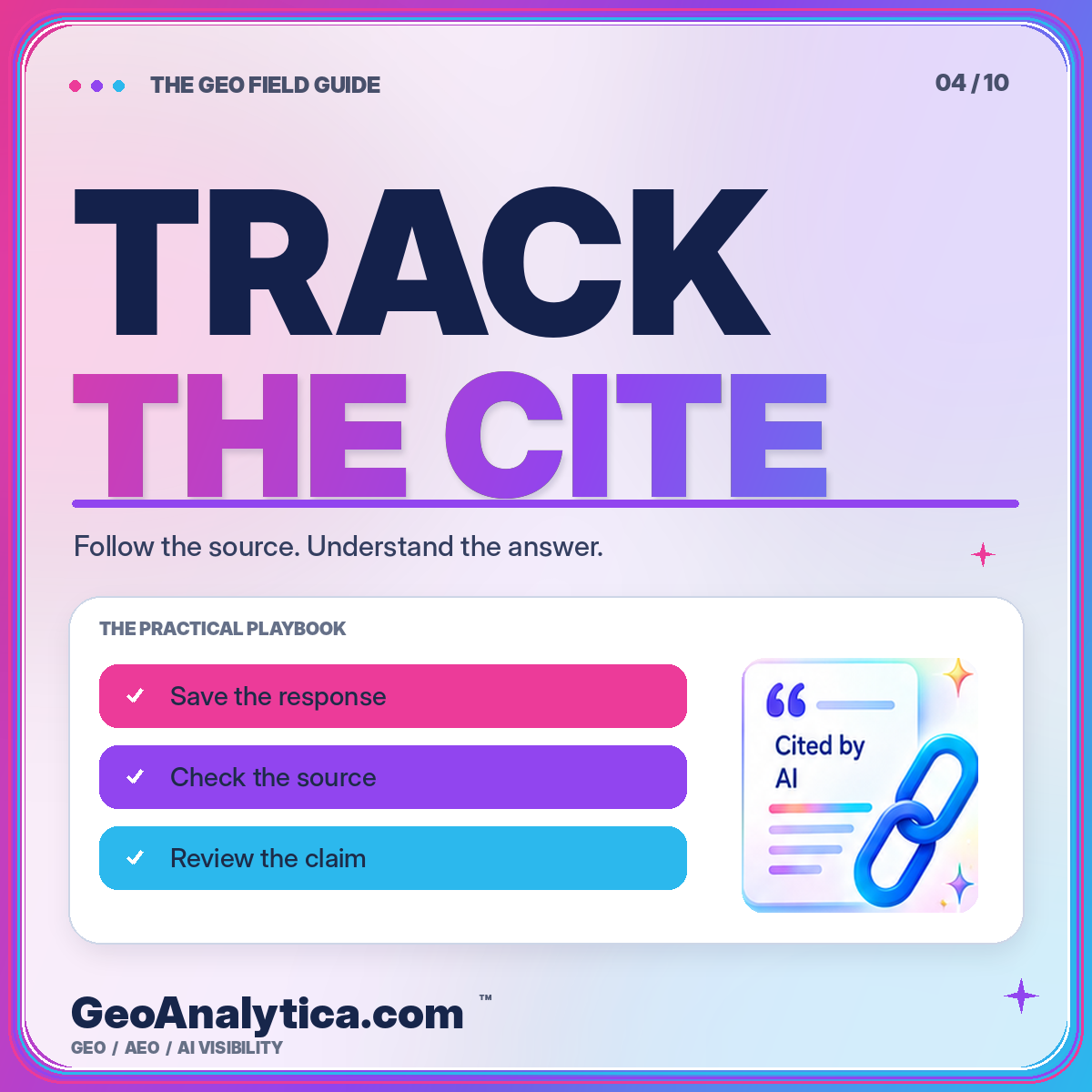
Learn how to track AI citations, define citation rates, review source accuracy, and turn a transparent observation sample into useful actions.
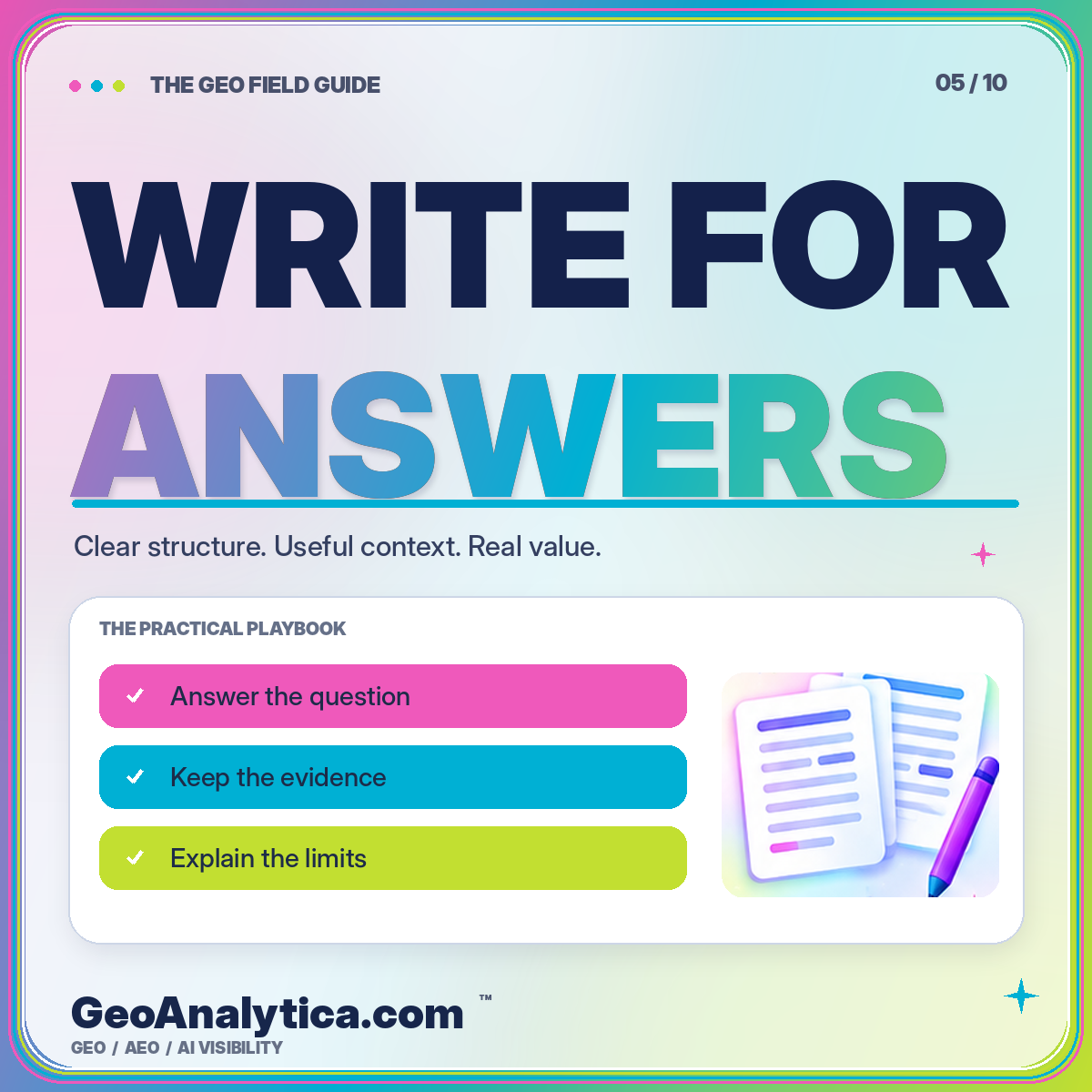
Write answer-ready content using clear definitions, fair comparisons, useful procedures, and evidence placed beside the claims it supports.
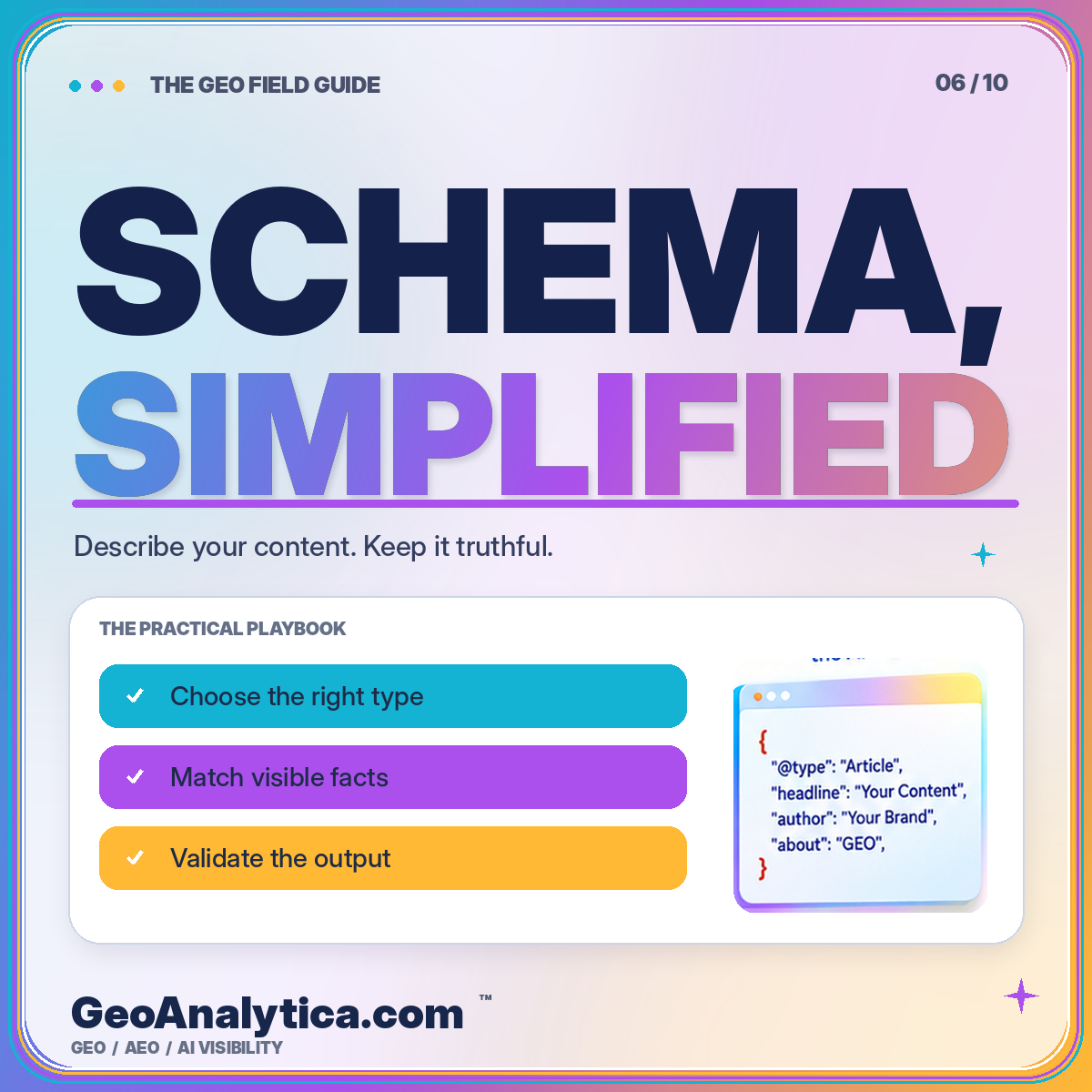
Use truthful structured data for articles, pages, and publishers. Learn how to keep JSON-LD aligned with visible content and canonical URLs.
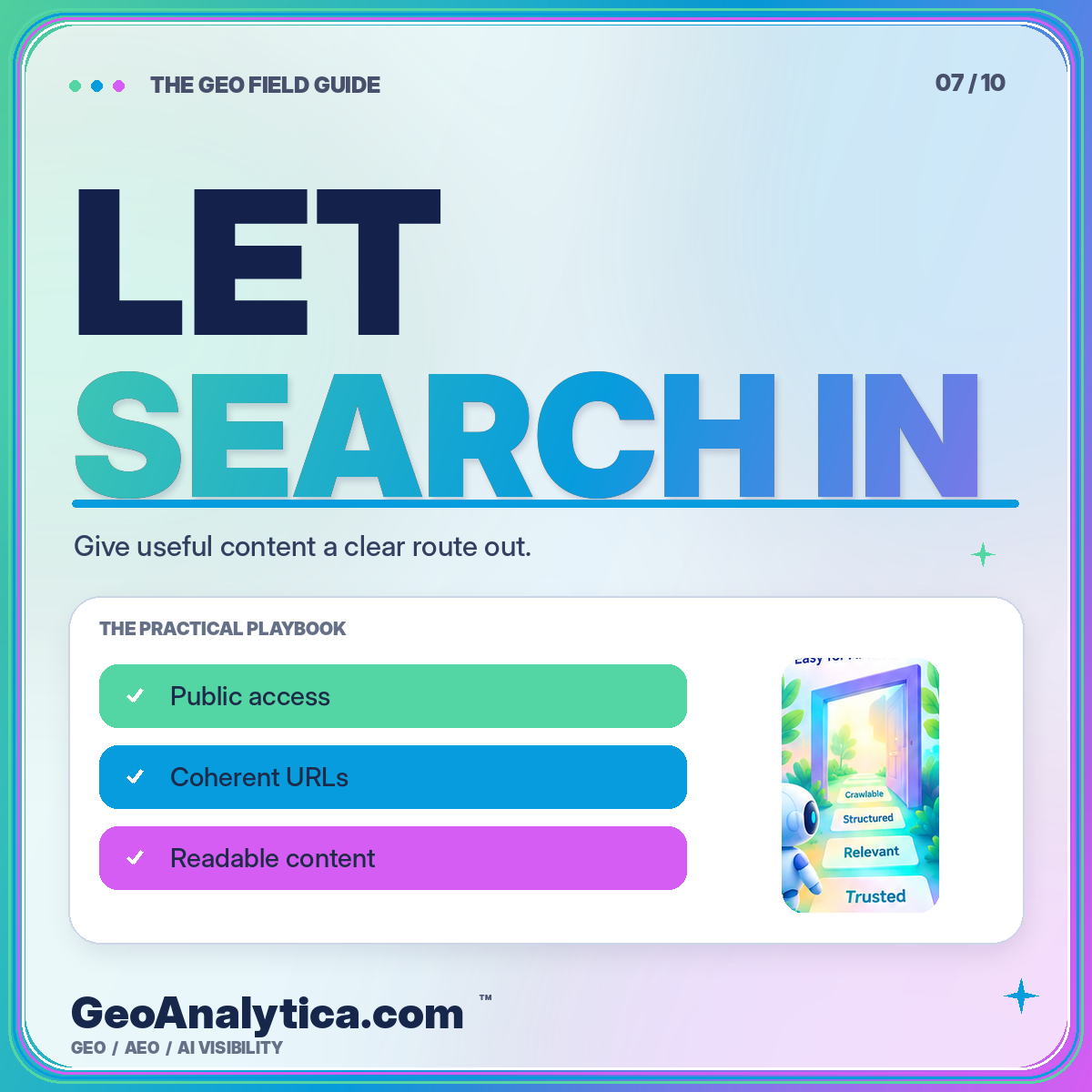
Review crawler access, delivered HTML, canonical URLs, internal links, and mobile usability before expanding your GEO content program.
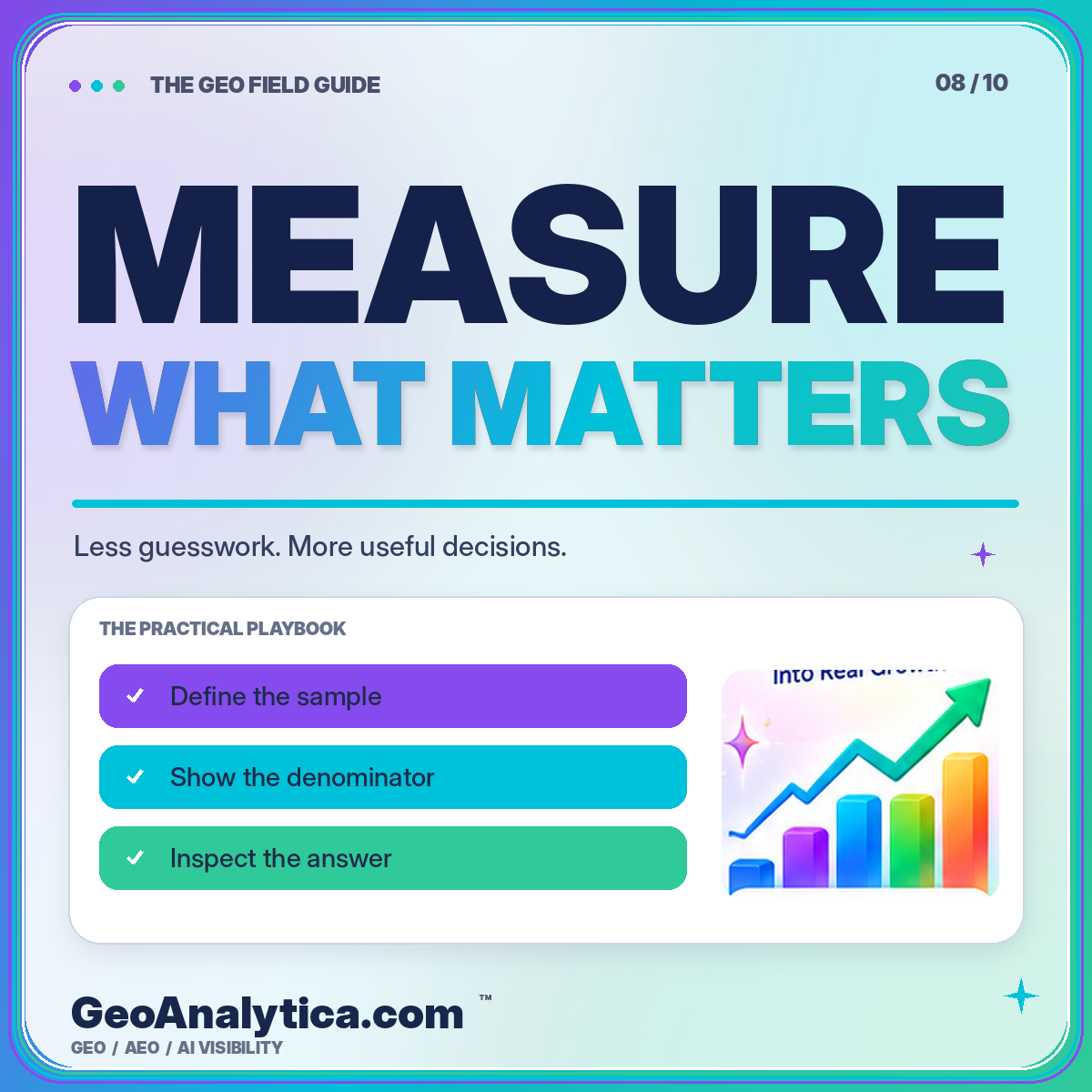
Separate AI mentions, citations, accuracy, and visitor outcomes. Build reporting with explicit denominators, documented samples, and actionable findings.

Build useful content authority with original evidence, clear authorship, consistent entity information, transparent methods, and a correction process.
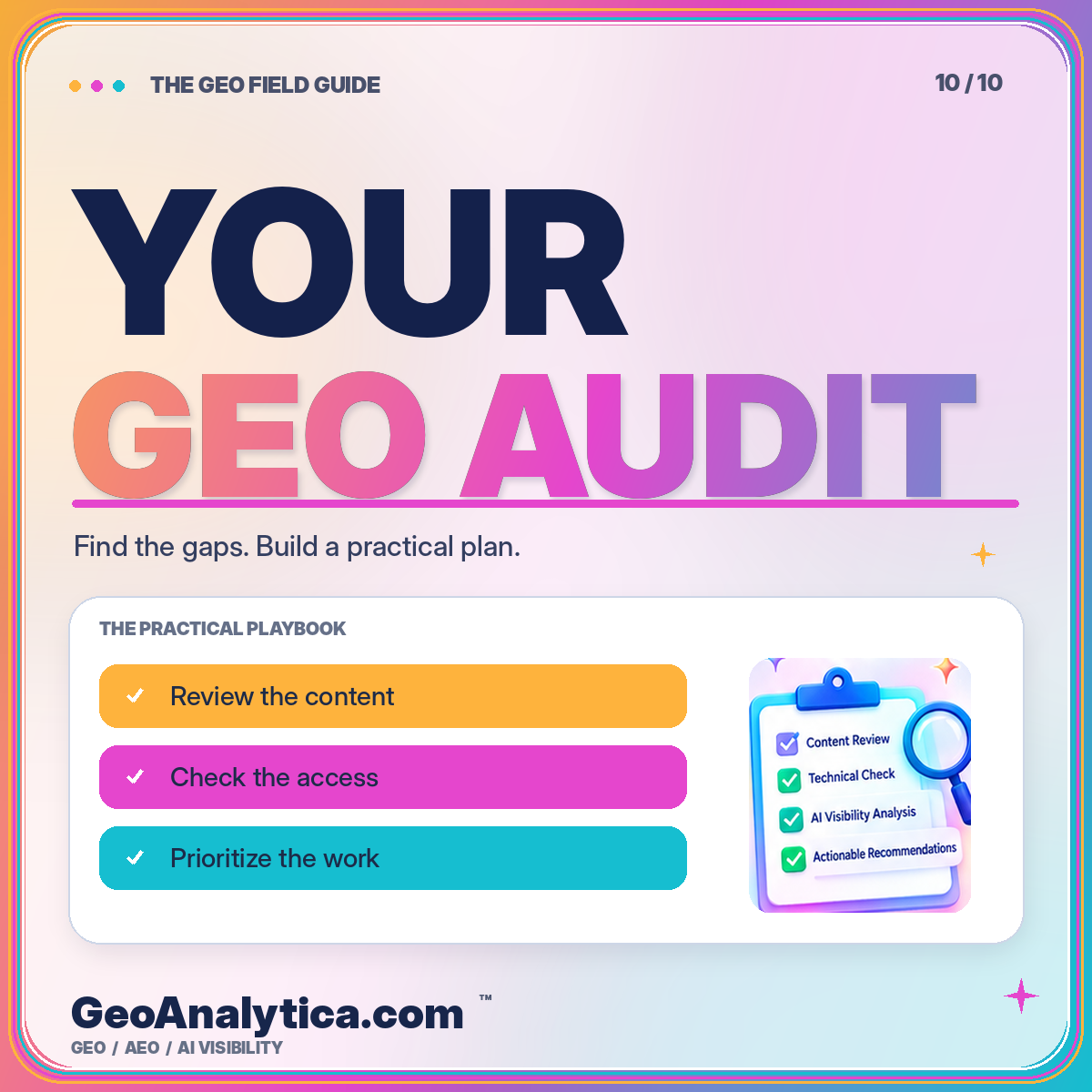
Run a focused GEO audit covering audience questions, page evidence, technical access, citations, and a prioritized implementation backlog.
Articles are listed from newest to oldest. Add the sitewide RSS feed to your reader for full article content and the site’s other public resources.