AI Search Visibility: A Practical Discoverability Guide
Build an AI search visibility program with a focused prompt set, clear source information, crawler awareness, and repeatable observations.
7 min readRead the guide
AI search optimization
Connect a technically accessible website with content that answers real questions. Focus on the pages and publishing decisions you can improve, then observe the results.
01 / AI Search Optimization
A page needs a clear purpose, useful information, and a dependable route from the rest of the site. AI search optimization should strengthen those foundations rather than replace them with speculative shortcuts. Review content and technical delivery together so the project targets the actual obstacle.
Google states that established SEO practices remain relevant to its AI search features, without special additional optimization requirements. That guidance is specific to Google. Avoid assuming every provider has identical crawling, retrieval, or citation behavior.
02 / AI Search Optimization
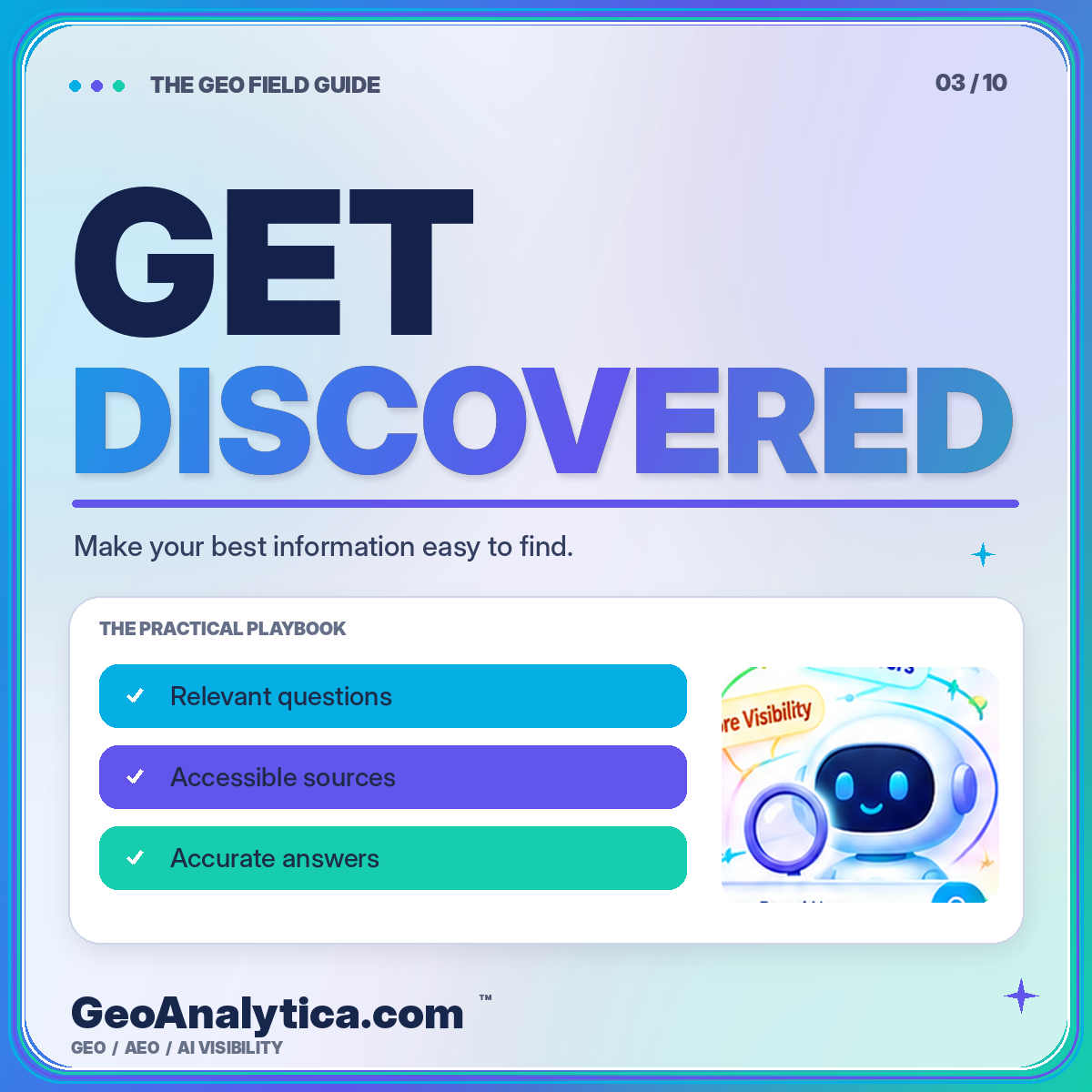
Identify the questions a prospective customer or reader genuinely needs answered. Assign each to a useful destination, review whether the evidence is adequate, and resolve overlapping or conflicting explanations. Do not create a near-duplicate page for every slight wording variation.
Pair direct explanations with details where they matter: prerequisites, limitations, definitions, and consistently labeled comparisons. A well-scoped page makes the intended answer easier to understand without promising that an external system will select it.
03 / AI Search Optimization
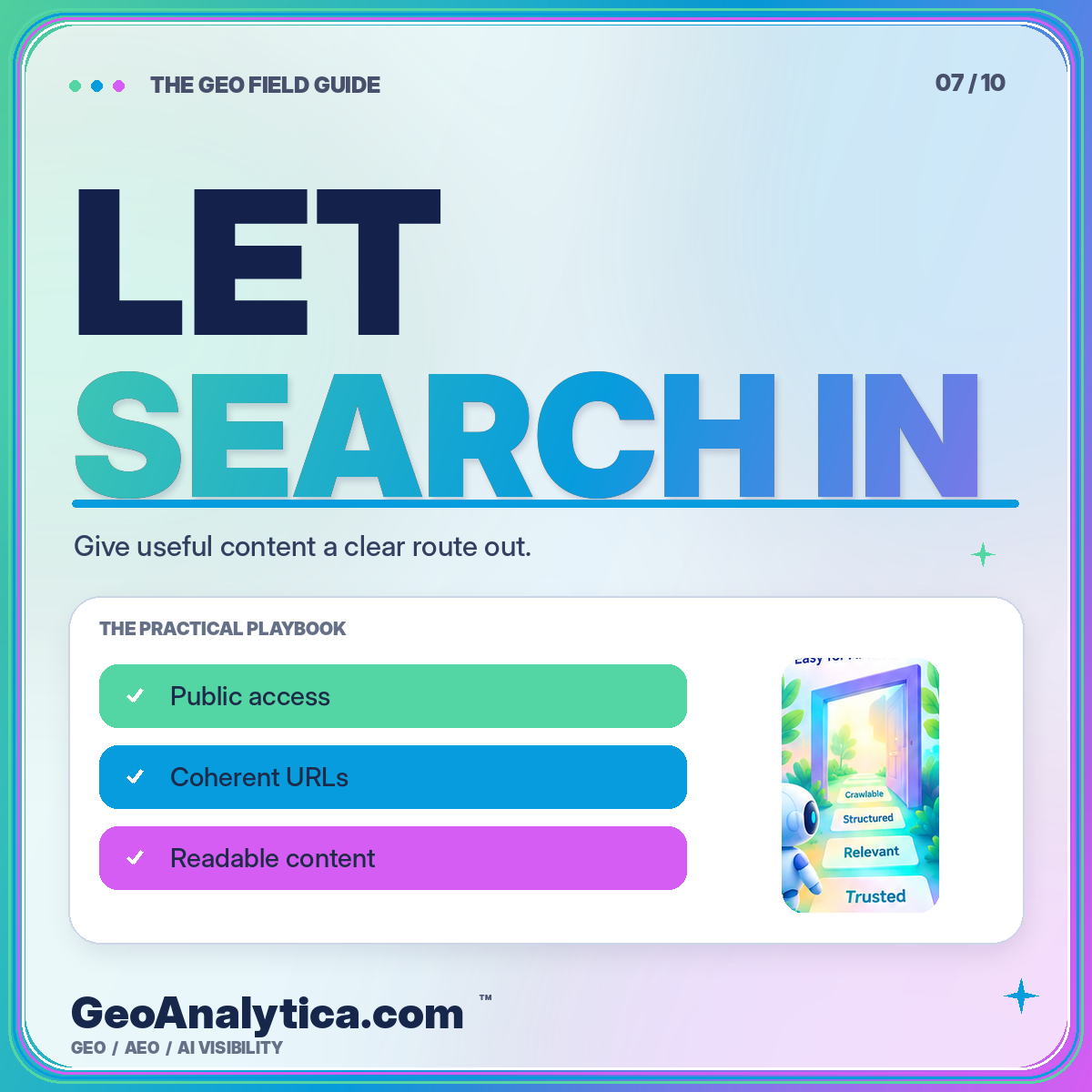
Have the technical owner review public access, robots rules, canonical addresses, internal links, and delivered text. Document provider-specific decisions instead of issuing a vague instruction to allow or block all AI. Sensitive information should remain protected.
After changes, verify implementation directly and collect a documented sample of responses separately. A successful deployment and a change in citations are different outcomes. Keep the observation conditions visible so the team can interpret the evidence responsibly.
Google’s AI features guidance. Google’s guidance explains the continued relevance of established SEO fundamentals for its AI search experiences.
GEO Field Notes
Build an AI search visibility program with a focused prompt set, clear source information, crawler awareness, and repeatable observations.
Review crawler access, delivered HTML, canonical URLs, internal links, and mobile usability before expanding your GEO content program.

Compare SEO, AEO, GEO, and LLMO. Build one coordinated content strategy with clear responsibilities, useful pages, and meaningful measurement.
Bright ideas. Practical next steps.
Share your public domain, audience, and priority questions. Start with a scope built around the information your readers actually need.