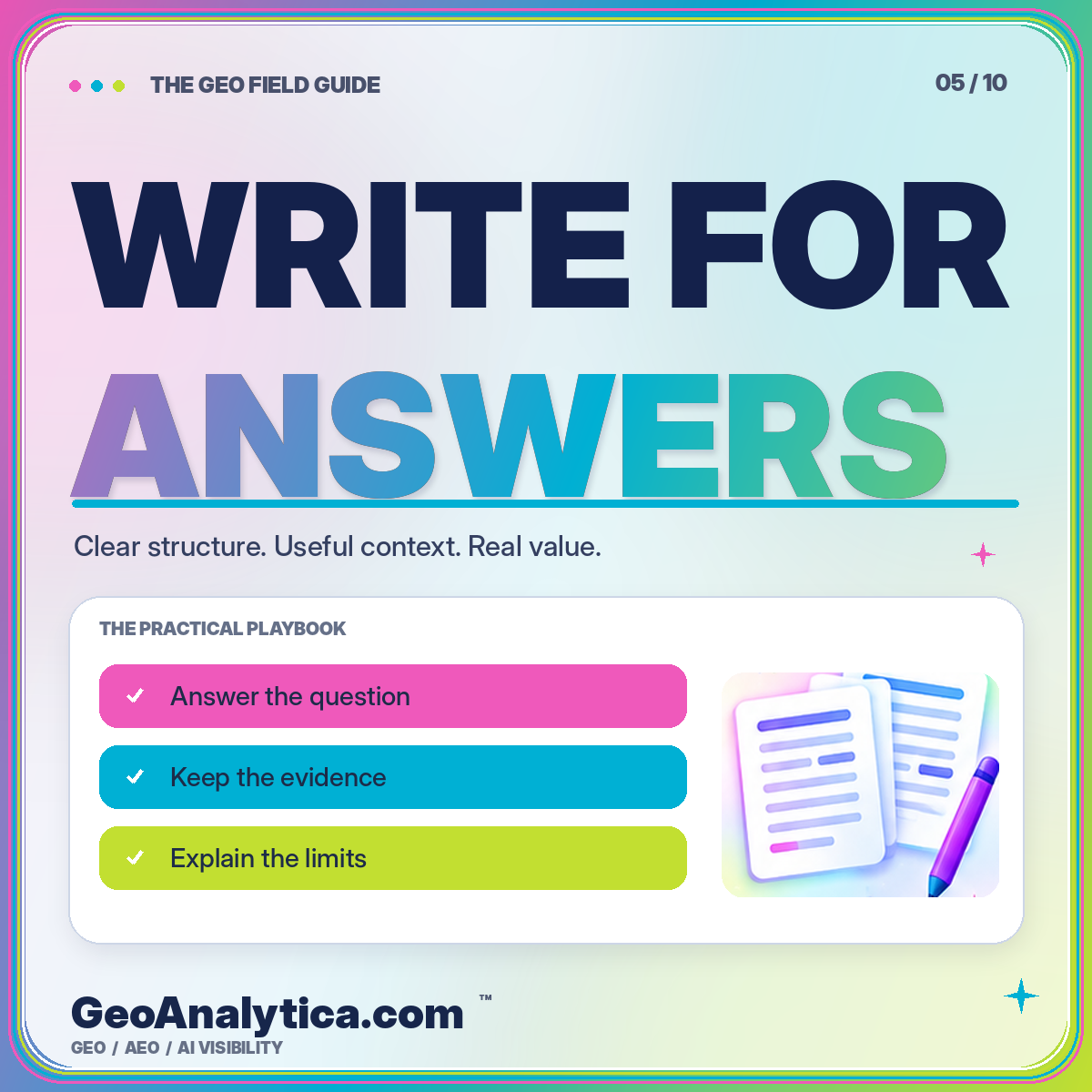
Answer-Ready Content: Write Clear, Evidence-Led Pages
Write answer-ready content using clear definitions, fair comparisons, useful procedures, and evidence placed beside the claims it supports.
7 min readRead the guide
Answer engine optimization
Help readers reach the answer without losing the context that makes it accurate. AEO turns confusing pages into clear explanations, practical comparisons, and usable steps.
01 / Answer Engine Optimization
We use answer engine optimization to describe the editorial work of making a question’s answer explicit and useful. A definition, a comparison, and a procedure require different structures. Choose the structure that helps the reader, rather than imposing one universal question-and-answer template.
A direct answer should identify its subject and preserve the important qualification. If a capability depends on an edition, a version, or a prerequisite, say so beside the claim. Concision is valuable only when the shorter explanation remains true.
02 / Answer Engine Optimization
Definition modules explain a concept and distinguish it from nearby concepts. Comparison modules use consistent criteria. Procedure modules state prerequisites, actions, and completion checks. Evidence modules connect a material statement to a source that can actually support it.
Review each module independently and within the whole page. A paragraph should not become ambiguous when read without its preceding heading, but the article should not repeat the same definition in every section. The aim is a coherent explanation with sensible routes to deeper detail.
03 / Answer Engine Optimization
Ask a reader to use the page for its intended task. Can they find the answer, understand the limitations, and take the next step? Resolve those problems before attributing every content decision to how a model might behave.
A scoped AEO project can produce revised openings, a heading plan, evidence notes, and reusable editorial checks. Follow-up observations can examine how a particular answer is represented, but the page should remain valuable even when no assistant cites it.
GEO Field Notes
Write answer-ready content using clear definitions, fair comparisons, useful procedures, and evidence placed beside the claims it supports.

Compare SEO, AEO, GEO, and LLMO. Build one coordinated content strategy with clear responsibilities, useful pages, and meaningful measurement.
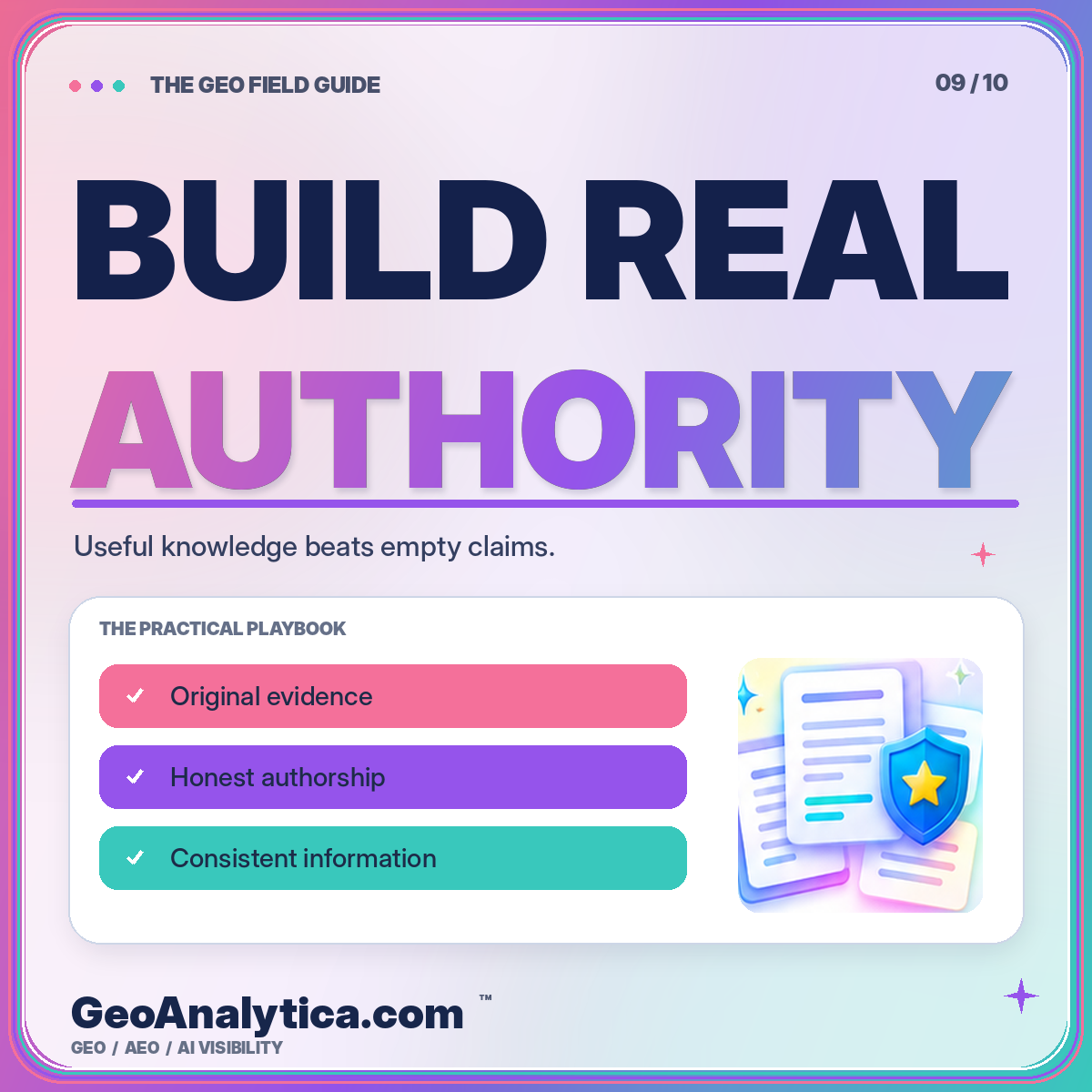
Build useful content authority with original evidence, clear authorship, consistent entity information, transparent methods, and a correction process.
Bright ideas. Practical next steps.
Share your public domain, audience, and priority questions. Start with a scope built around the information your readers actually need.