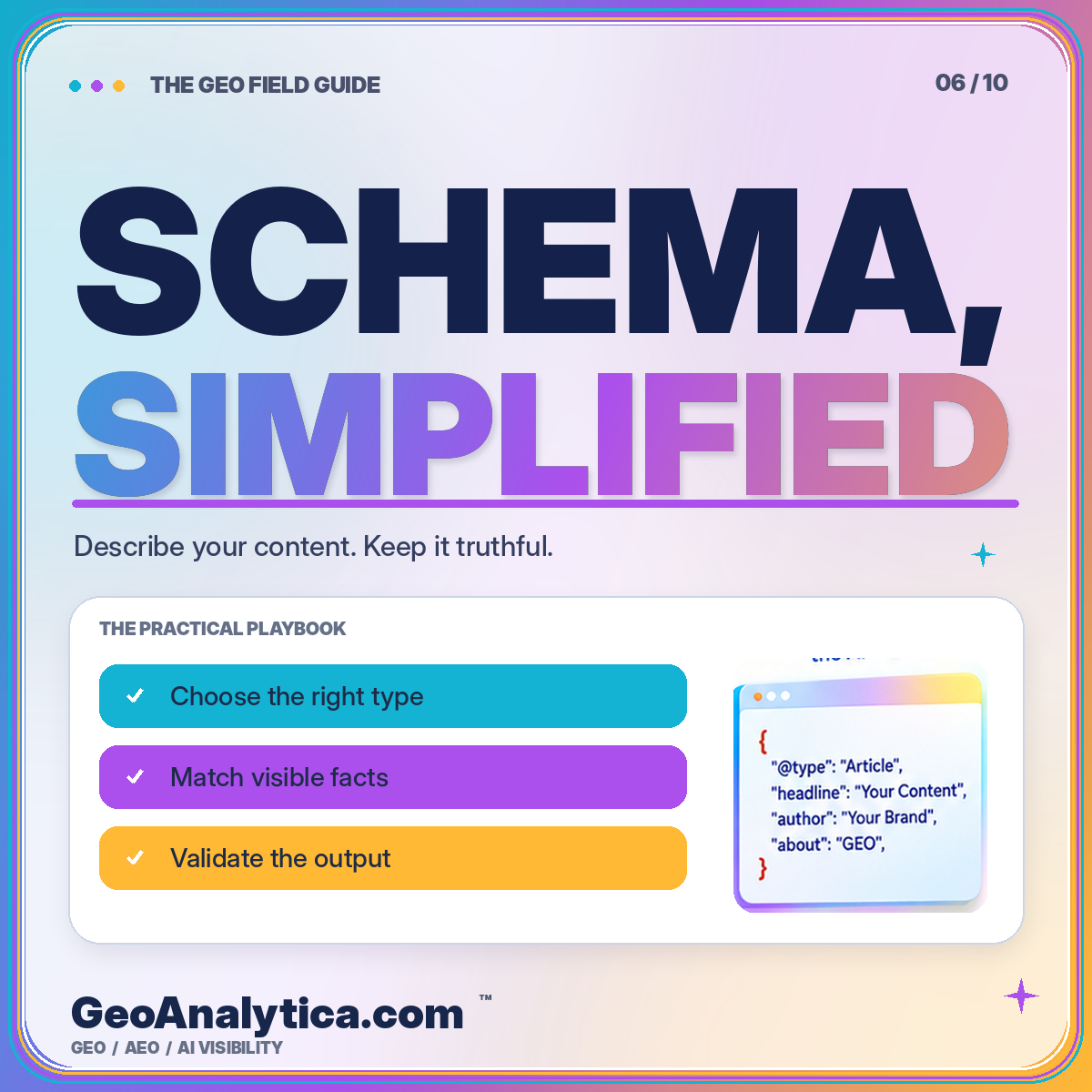
Structured Data for GEO: A Practical Schema Guide
Use truthful structured data for articles, pages, and publishers. Learn how to keep JSON-LD aligned with visible content and canonical URLs.
6 min readRead the guide
Structured data for GEO
Use machine-readable descriptions that match the visible facts. Appropriate schema, stable identifiers, and careful validation are more useful than oversized markup full of assumptions.
01 / Structured Data
Confirm the headline, page purpose, author or publisher identity, image, and canonical address before writing the markup. Choose appropriate types such as WebPage, WebSite, BlogPosting, and BreadcrumbList when they fit the actual content.
Do not copy sample ratings, credentials, locations, or commercial offers into a live implementation. Optional information should be omitted when the site cannot support it accurately.
02 / Structured Data
Use stable identifiers for the same organization and website across pages. Connect an article to its canonical page and actual publisher. Make sure a breadcrumb describes the visible navigation hierarchy rather than an invented path.
Keep publication and modification dates honest. A technical rebuild does not automatically mean an article received a substantive editorial update. Review the visible and machine-readable versions together.
03 / Structured Data
A JSON parser can check syntax, but the content owner must verify the facts and the developer must check the delivered page. Inspect for duplicate graphs, conflicting properties, broken image paths, and incorrect canonical addresses.
Google’s structured data documentation explains supported uses and requirements. Valid markup is not a promise of a rich result or an AI citation. Pair this work with relevant content and dependable technical delivery.
Google’s structured data introduction. Review the requirements for the particular structured data type and search feature you intend to support.
GEO Field Notes
Use truthful structured data for articles, pages, and publishers. Learn how to keep JSON-LD aligned with visible content and canonical URLs.
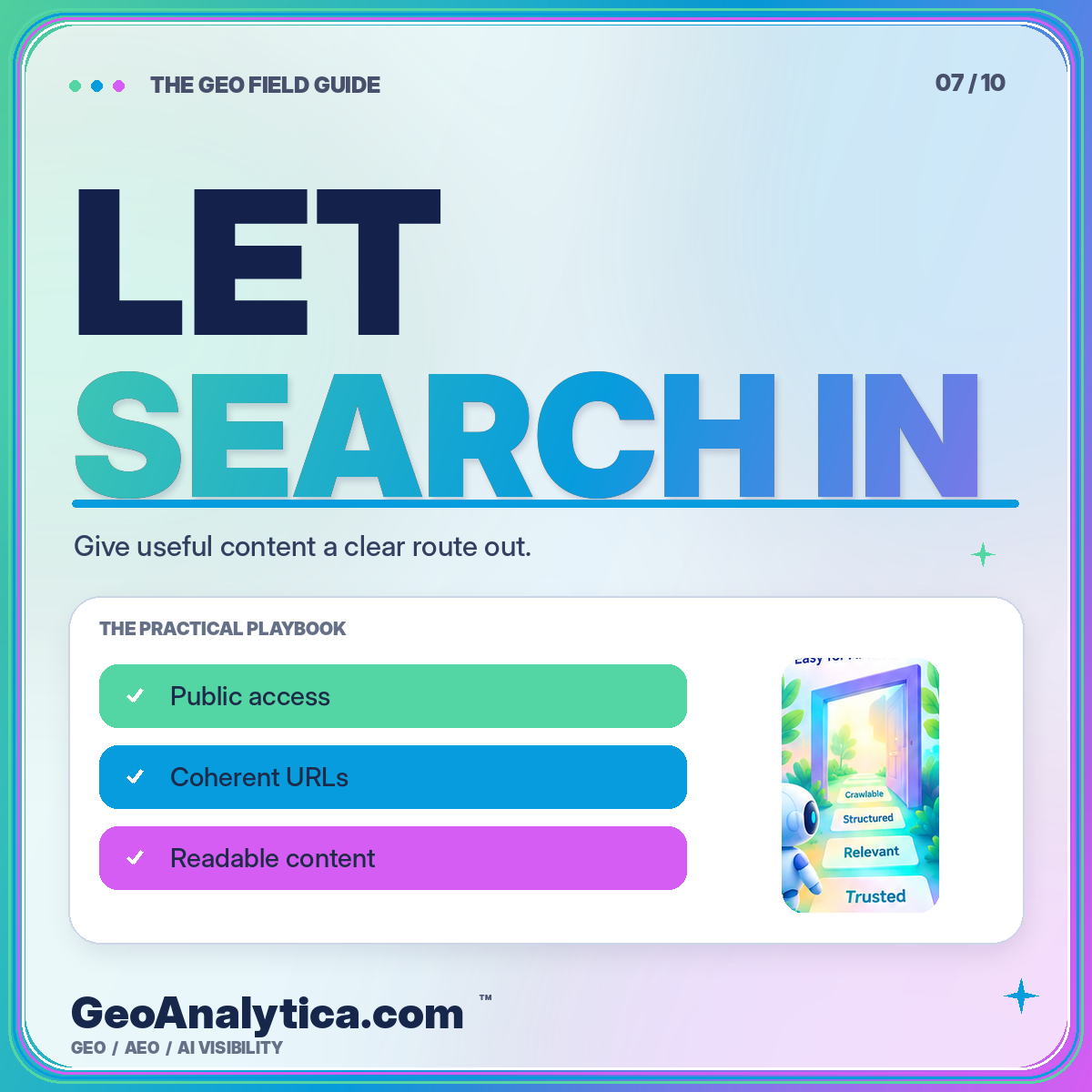
Review crawler access, delivered HTML, canonical URLs, internal links, and mobile usability before expanding your GEO content program.
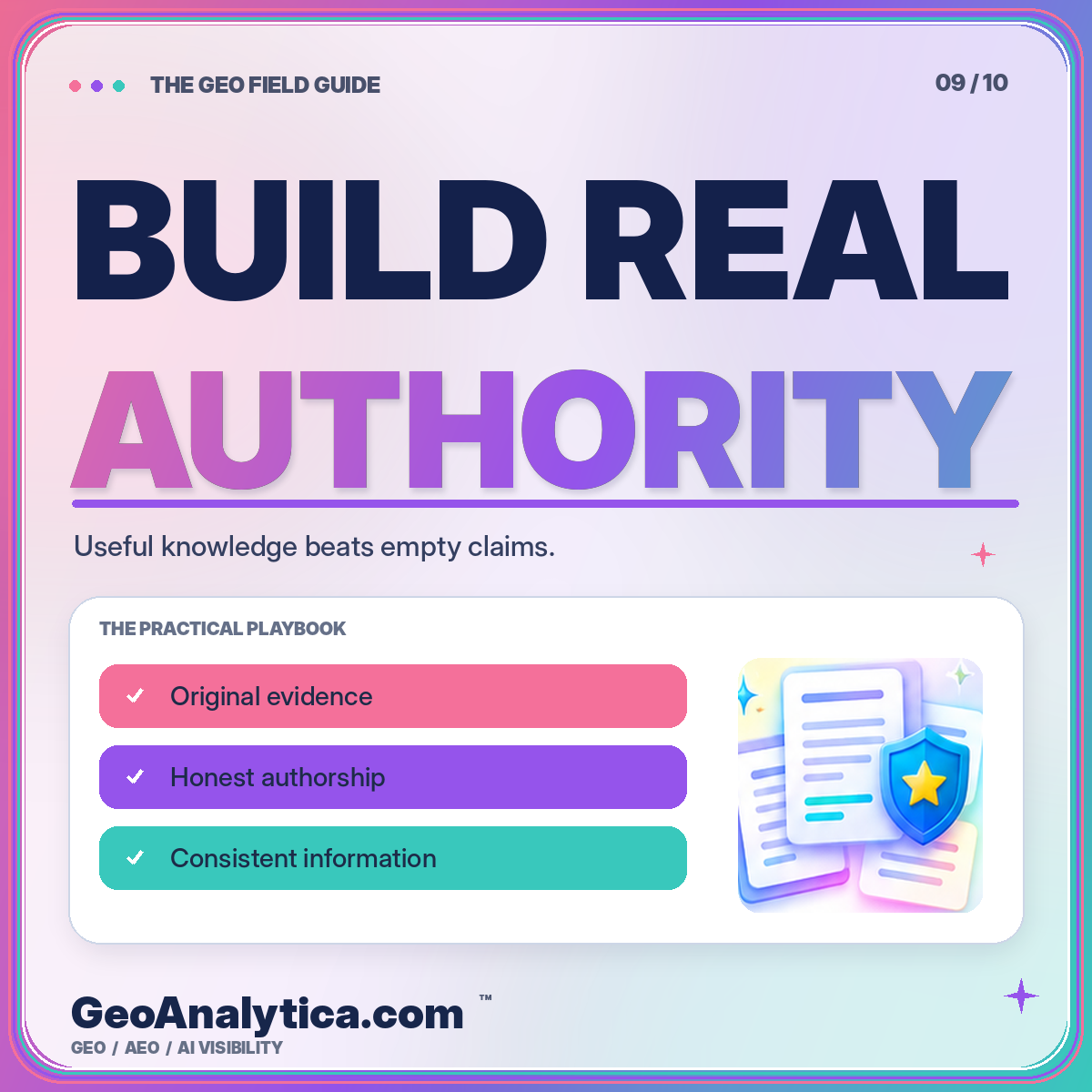
Build useful content authority with original evidence, clear authorship, consistent entity information, transparent methods, and a correction process.
Bright ideas. Practical next steps.
Share your public domain, audience, and priority questions. Start with a scope built around the information your readers actually need.